Finding the right night light can make nighttime trips feel less disorienting when you experience vertigo. The best options provide enough illumination for safe movement without creating harsh glare or an abrupt burst of brightness.
This roundup compares 10 plug-in night lights with features such as amber LEDs, adjustable brightness, motion detection, and automatic dusk-to-dawn sensing. Use the guide below to match the light’s color, placement, and controls to your space and comfort.
Best 10 Night Lights with Vertigo Picks for 2026
Sleep-Friendly Red Glow

- Pure 635nm red LED with zero blue light
- Three brightness levels with diffused glow
- Dusk-to-dawn sensor and free outlet socket
Best For: Light-sensitive sleepers needing gentle pathway lighting
Whole-Home Coverage
Six-Pack Warm LED Night Lights

- Six lights for multiple rooms and pathways
- Automatic dusk-to-dawn sensor
- Warm 2700K glow with 90-degree swiveling plug
Best For: Multi-room indoor nighttime coverage
Soft Amber Comfort
GE SleepLite Amber Night Light

- Warm amber glow with frosted lens
- Automatic dusk-to-dawn operation
- Two-pack with cool-to-touch LED construction
Best For: Bedrooms and hallways needing gentle amber visibility
Customizable Path Lighting
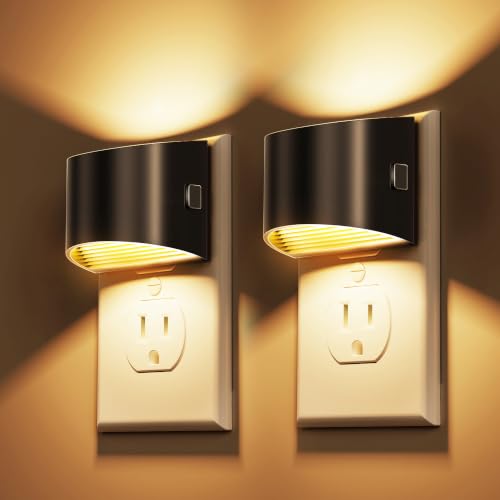
- Three settings from 30 to 100 lumens
- Dusk-to-dawn sensor for automatic operation
- Cylindrical design leaves the lower outlet free
Best For: Users wanting adjustable hallway and bedroom lighting
Soft Amber Adjustable Pick
Amber 1800K Dimmable Night Light

- Soft, low-blue amber glow
- 0–50 lumen adjustable brightness
- Automatic light sensor; two-pack
Best For: Flexible brightness control in bedrooms, bathrooms, and hallways
Whole-Home Value Pick
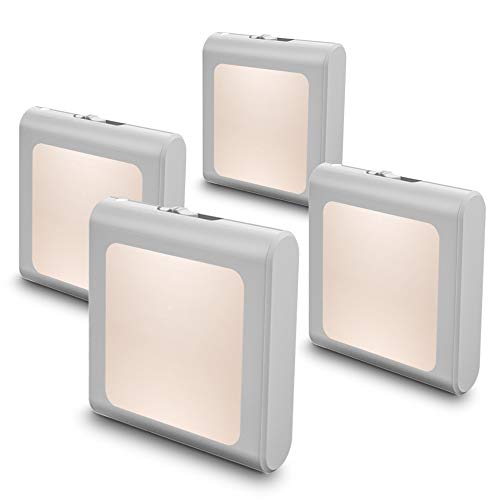
- Four lights for broad room coverage
- Stepless 0–15 lumen adjustment
- Automatic dusk-to-dawn sensor
Best For: Lighting several indoor pathways on a budget
Motion-Responsive Amber Pick
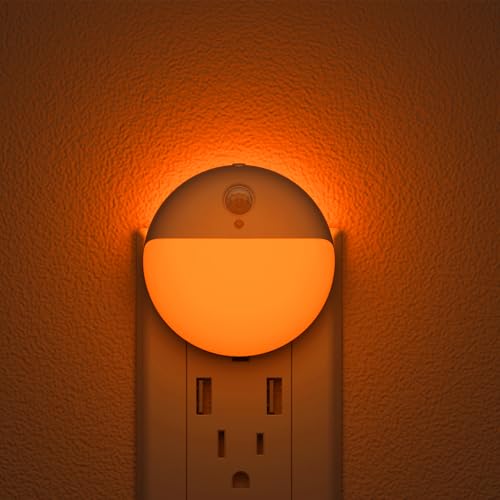
- 1500K amber glow with 99.95% blue-light blocking
- Motion, Owl, and dusk-to-dawn modes
- Backlight, front light, or dual-light settings
Best For: Motion-triggered nighttime navigation in bedrooms and hallways
Best Adjustable Guide Light
Rotating GE Plug-In Night Light

- 360-degree rotation directs light where needed
- Dusk-to-dawn sensor automates nighttime use
- Two-pack with soft white 40-lumen LEDs
Best For: Directional lighting on stairs, hallways, and entryways
Best Motion-Activated Option
AUVON Dimmable Plug-In Night Lights

- Motion sensing covers 3–5 meters at 120 degrees
- Dimmable from 1 to 50 lumens
- Four-pack with dusk-to-dawn mode
Best For: Customizable lighting across hallways, stairs, and bathrooms
Best Simple Multi-Pack
LED Dusk-to-Dawn Night Light Lamp
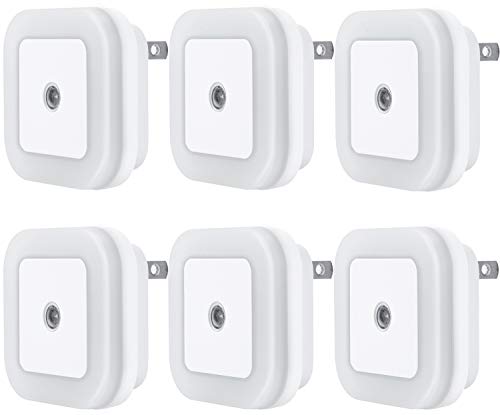
- Automatic dusk-to-dawn light sensor
- Six compact plug-in lights
- Low 0.5-watt LED design
Best For: Basic coverage across multiple indoor rooms and pathways
Sleep-Friendly Red Glow – Adjustable Red Night Light
For shoppers seeking night lights with vertigo, this two-pack offers a low-level red glow designed to support nighttime orientation without harsh direct beams. Three brightness settings, diffusion, and automatic dusk-to-dawn operation make it practical for bedrooms, bathrooms, and hallways.
Best For: Light-sensitive sleepers who want adjustable, sleep-friendly pathway lighting.
Pros:
- Pure 635nm red LED with zero blue light
- Three-level brightness adjustment
- Diffused, indirect glow helps limit glare
- Leaves the second outlet socket free
Cons:
- Not waterproof or water-resistant
- Red light may not suit shoppers who prefer neutral or warm-white illumination
Its soft, indirect red output and hands-free sensor make it a particularly gentle option for nighttime movement. Choose it when minimizing visual stimulation matters more than bright, general-purpose lighting.
Whole-Home Coverage – Six-Pack Warm LED Night Lights
These six plug-in LEDs are a practical choice for night lights with vertigo when consistent illumination is needed across several routes. Their 2700K warm-white glow, automatic sensor, and swiveling plug work well in hallways, bathrooms, bedrooms, and other indoor spaces.
Best For: Households that want multiple sensor-activated lights for broad indoor coverage.
Pros:
- Six lights provide coverage for multiple rooms
- Automatic dusk-to-dawn operation
- Warm 2700K illumination
- Plug swivels 90 degrees for vertical or horizontal sockets
Cons:
- Non-dimmable
- Not waterproof or water-resistant
- The plug should not be rotated while installed because it may flicker
This set prioritizes quantity and convenience over brightness customization. It is a sensible pick if you want to light several nighttime paths without manually switching each fixture.
Soft Amber Comfort – GE SleepLite Amber Night Light
For a straightforward option among night lights with vertigo, the GE SleepLite uses a soft amber glow and a frosted lens to provide gentle nighttime visibility. Its dusk-to-dawn sensor and compact plug-in design suit bedrooms, hallways, nurseries, and bathrooms.
Best For: Shoppers who prefer a warm amber light with simple automatic operation.
Pros:
- Amber light is designed to be gentler than white light
- Automatic dusk-to-dawn activation
- Two-pack supports lighting in multiple rooms
- Cool-to-the-touch, UL-listed LED design
Cons:
- Not waterproof or water-resistant
- Brightness adjustment is not listed
- Compact design may use the second outlet depending on installation
This is a simple, sleep-oriented choice for people who want warm illumination without extra controls. The amber tone and diffused lens make it better suited to relaxed nighttime routines than bright task lighting.
Customizable Path Lighting – L LOHAS Dimmable Night Light
This two-pack is a useful pick for night lights with vertigo when you want to adjust illumination for different nighttime conditions. The L LOHAS model offers 30, 60, and 100-lumen settings, plus a dusk-to-dawn sensor and a cylindrical design that leaves the lower outlet available.
Best For: Users who want adjustable brightness for bedrooms, bathrooms, stairs, and hallways.
Pros:
- Three brightness levels from 30 to 100 lumens
- Automatic dusk-to-dawn sensing
- Design does not block the bottom outlet
- Low maximum power consumption of 1 watt
Cons:
- Not water-resistant despite being listed for indoor and outdoor usage
- Soft-white 3000K light may be more stimulating than amber or red light
- Brightness control requires using the side button
Its adjustable output gives you more control than a fixed-brightness night light, which can be helpful when balancing visibility and comfort. Select the lower setting for subtle orientation or the higher setting for clearer pathway lighting.
Soft Amber Adjustable Pick – Amber 1800K Dimmable Night Light
If you are comparing night lights with vertigo, this two-pack offers a soft amber 1800K glow and adjustable brightness from 0 to 50 lumens. Its light sensor turns the LEDs on in darkness and off in brighter conditions, making it practical for bedrooms, hallways, bathrooms, and stairs.
Best For: Shoppers who want the widest brightness range and a low-blue amber glow for indoor nighttime navigation.
Pros:
- Soft amber light is designed to be gentle on the eyes and low in blue light.
- Brightness adjusts from 0 to 50 lumens with a slide switch.
- Automatic light sensing turns the night light on and off as ambient light changes.
- Uses 0.5W LED power and includes two units.
Cons:
- Indoor use only; it is not waterproof or water resistant.
- The plug-in design requires an available wall outlet.
The broad dimming range makes this a flexible choice when bright light may be uncomfortable. Set it low for a subtle bedroom glow or higher for clearer guidance through a hallway or bathroom.
Whole-Home Value Pick – MAZ-TEK Warm White 4-Pack
For anyone seeking night lights with vertigo support throughout the home, this four-pack provides warm white illumination for routes such as bedrooms, hallways, kitchens, bathrooms, and stairways. A dusk-to-dawn sensor handles automatic operation, while the slide switch provides stepless adjustment from 0 to 15 lumens.
Best For: Covering multiple rooms with compact, energy-efficient plug-in lights.
Pros:
- Four lights can provide coverage across several nighttime pathways.
- Stepless brightness adjustment lets you choose a subdued or more visible glow.
- Automatic dusk-to-dawn operation turns the lights on when ambient light is insufficient.
- Each LED uses up to 0.5W and is rated for up to 50,000 hours.
Cons:
- The warm white output is not the amber 1500K or 1800K style of the other options.
- Indoor use is specified, despite conflicting water-resistance information in the listing details.
Its main advantage is coverage: four compact units can reduce dark gaps between the bedroom, bathroom, and other frequently used areas. The 0–15 lumen range is suited to navigation rather than detailed tasks.
Motion-Responsive Amber Pick – 1500K Dual-Mode Night Light
This motion-responsive option is designed for shoppers comparing night lights with vertigo who want low-blue amber illumination without leaving a bright light on continuously. It offers backlight, front light, or dual-light operation, plus Owl, Motion-Only, and dusk-to-dawn modes.
Best For: Bedrooms, nurseries, bathrooms, and stairways where motion-triggered guidance and directional lighting are useful.
Pros:
- 1500K amber light is specified to block 99.95% of blue light.
- Motion mode can brighten the front light and fade it after 60 seconds.
- Choose backlight only, front light only, or both lights together.
- Stepless 1–15 lumen dimming and a slim design leave the second outlet free.
Cons:
- It is intended for navigation and ambiance, not reading or detailed work.
- Indoor use only; the unit is not waterproof.
- This two-pack has a lower maximum brightness than the first product.
The combination of motion activation, directional front lighting, and very warm amber output makes this the most feature-focused choice in the group. It is especially useful where you want brief illumination for nighttime movement rather than continuous brightness.
Best Adjustable Guide Light – Rotating GE Plug-In Night Light
For shoppers seeking night lights with vertigo, directional control can help place soft illumination where it is most useful without lighting an entire room. This two-pack from GE has a 360-degree rotating design, a dusk-to-dawn sensor, and 40 lumens of soft white LED light for hallways, stairs, bathrooms, and other indoor areas.
Best For: People who want adjustable, always-on guide lighting near stairs, hallways, or entryways.
Pros:
- 360-degree rotation lets you aim the light toward a walkway or stair area.
- Dusk-to-dawn sensor turns the light on automatically at dusk and off at dawn.
- Energy-efficient, cool-to-the-touch LED provides 40 lumens of soft white light.
- UL-certified design and compact plug-in installation.
Cons:
- Indoor use only; it is not waterproof or water resistant.
- Provides a fixed soft-white output rather than adjustable brightness.
- Uses an outlet, so placement depends on available wall sockets.
The rotating head is the main advantage for vertigo-conscious navigation because you can direct the light toward the floor, stairs, or a hallway instead of relying on broad overhead lighting. Its automatic sensor also minimizes the need to operate a switch at night.
Best Motion-Activated Option – AUVON Dimmable Plug-In Night Lights
These AUVON night lights with vertigo-friendly features combine motion activation, dusk-to-dawn operation, and adjustable brightness. The four-pack can provide consistent low-level lighting around a home, while the compact design leaves the second outlet available.
Best For: Households that want customizable lighting and automatic activation along multiple nighttime routes.
Pros:
- Motion sensor detects movement from 3–5 meters across a 120-degree range.
- Auto mode activates in darkness and switches off after 60 seconds without motion.
- Five-step and stepless dimming adjust output from 1 to 50 lumens.
- Four-pack, compact outlet-friendly design, and V-0 fire-resistant casing.
Cons:
- Motion mode requires darkness or insufficient ambient light to activate.
- Indoor use only and not water resistant.
- More settings may require more adjustment than a basic sensor light.
The combination of dimming and motion detection makes this the most flexible choice in the group. You can use a low setting for steady nighttime illumination or let the light activate only when movement is detected, helping limit unnecessary brightness.
Best Simple Multi-Pack – LED Dusk-to-Dawn Night Light Lamp
For a straightforward approach to night lights with vertigo, this six-pack provides automatic dusk-to-dawn illumination without motion settings or complicated controls. Its daylight-white LED output is intended to be bright enough to see where you are going while remaining compact for indoor plug-in use.
Best For: Buyers who need several basic automatic lights for bedrooms, bathrooms, hallways, or a nursery.
Pros:
- Sensitive light sensor automatically turns the lights on at dusk and off at dawn.
- Six-pack can cover multiple rooms or nighttime pathways.
- Low 0.5-watt design uses long-life LEDs and is energy efficient.
- Compact plug-in format suits hallways, bedrooms, kitchens, and other indoor spaces.
Cons:
- No motion sensor or brightness adjustment is listed.
- The daylight-white color may feel less soft than warm-white lighting.
- Supplied specifications are inconsistent about water resistance, so indoor use is the safer choice.
This is the simplest option for evenly distributing low-level light throughout a home. The six-pack is useful when vertigo-related nighttime navigation involves several rooms, though shoppers wanting directional aiming or dimming may prefer one of the other models.
How We Picked the Best Night Lights with Vertigo
We focused on features that can improve nighttime visibility while minimizing sudden or excessive light. Our selection includes warm and amber color temperatures, dimmable designs, low-wattage LEDs, dusk-to-dawn sensors, motion activation, and rotating or adjustable bodies. We also considered pack size and placement flexibility for bedrooms, hallways, bathrooms, and stair routes.
Because vertigo triggers and light sensitivity vary, no single design suits everyone. The most useful choice is usually the one that gives consistent orientation cues without washing out the room or causing uncomfortable glare.
Quick Comparison
| Feature | Best for | What to look for |
|---|---|---|
| Amber or red light | Light-sensitive sleepers | Warm color temperature and low brightness |
| Dimmable output | Custom comfort | Multiple brightness levels or a gradual glow |
| Motion sensor | Short nighttime trips | Reliable activation and a suitable detection range |
| Dusk-to-dawn sensor | Continuous low-level guidance | Automatic operation without manual switching |
| Rotating or directional body | Targeted illumination | Adjustability that keeps light off the bed or eyes |
Key Buying Factors for Night Lights with Vertigo
Color and Brightness
Amber and red-toned lights generally create a softer nighttime effect than cool daylight white. Choose the lowest brightness that clearly illuminates the floor, obstacles, and nearby handrails. Dimmable models are especially helpful if your sensitivity changes from night to night.
Sensor Behavior
Dusk-to-dawn lights stay on when the room is dark, which can provide a steady visual reference. Motion-sensor models conserve energy and avoid constant light, but they may briefly activate at an unexpected moment. If sudden changes worsen symptoms, a low, always-on glow may be preferable.
Placement and Glare Control
Install lights low enough to illuminate the walking path, but avoid positioning them directly at eye level. Look for rotating housings or shielded designs when possible. Use more than one light along a route if shadows or abrupt changes in brightness could affect balance.
Coverage and Convenience
Check outlet locations, sensor range, plug orientation, and whether the light blocks a second socket. Multi-packs are useful for connecting the bedroom, hallway, bathroom, and stairs into one predictable route.
Who Should Buy Which Night Lights with Vertigo?
- Choose amber or red models if you want the gentlest glow for a bedroom or are particularly sensitive to cool light.
- Choose a dimmable night light if you need to fine-tune brightness for different rooms or times of night.
- Choose motion-sensor models for bathrooms, hallways, and other areas where illumination is needed only while walking.
- Choose dusk-to-dawn models if a consistent reference light helps you orient yourself before standing or moving.
- Choose rotating designs when you need to direct light toward the floor, steps, or a doorway rather than across the room.
For anyone comparing Night Lights with Vertigo, prioritize predictable operation, low glare, and clear floor-level visibility over maximum brightness. If vertigo is new, severe, or accompanied by other concerning symptoms, consult a healthcare professional rather than relying on lighting alone.