Studio monitors with ribbon tweeters can deliver a fast, detailed top end that helps you hear vocal texture, cymbals, ambience, and mix problems more clearly. This roundup covers compact nearfield models, larger high-output monitors, and a few versatile options for home studios.
Use the guide below to match monitor size and ribbon-style high-frequency performance to your room, listening distance, production style, and budget.
Best 10 Studio Monitors with Ribbon Tweeters Picks for 2026
Deep-Bass Ribbon Reference

- ART ribbon tweeter with HPS waveguide
- 35Hz–22kHz response and 118dB SPL
- Isolation pads and XLR cables included
Best For: Bass-intensive production and larger mix rooms
Wide-Image AMT Monitor

- 6.8-inch AMT tweeter for articulate highs
- 6.5-inch woofer with clean, punchy bass
- Acoustic tuning and multiple analog inputs
Best For: Broadcast, post-production, and home recording
Connected Ribbon Bookshelf Pair
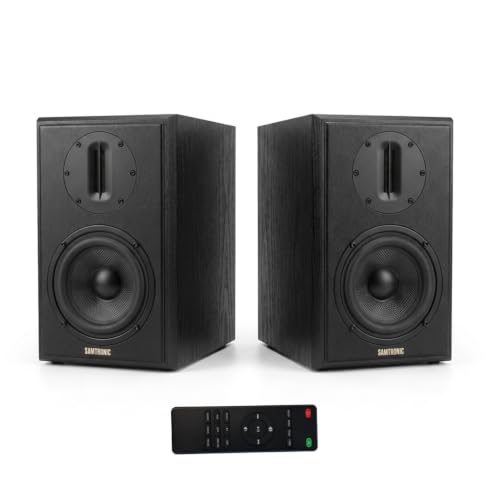
- 4-inch planar ribbon tweeter
- 200W DSP-based Class D stereo power
- USB, HDMI ARC, optical, RCA, and Bluetooth
Best For: Home listening and versatile desktop multimedia
Wide-Sweet-Spot Studio Monitor

- EBM waveguide with 100° horizontal coverage
- 6.55-inch woven-composite woofer
- Multiple acoustic tuning controls
Best For: Mixing with a broad listening area and flexible room correction
Compact Desk Upgrade

- Pair of 4.5-inch desktop monitors
- Front-panel tone and location controls
- Includes isolation pads and cables
Best For: Small desktop studios and everyday monitoring
Ribbon-Style Detail Pick

- U-ART ribbon-style tweeter with HPS waveguide
- 7-inch woofer for extended low end
- DSP shelf filters for room adjustment
Best For: Mixing, production, broadcast, and video post
Large-Room Workhorse
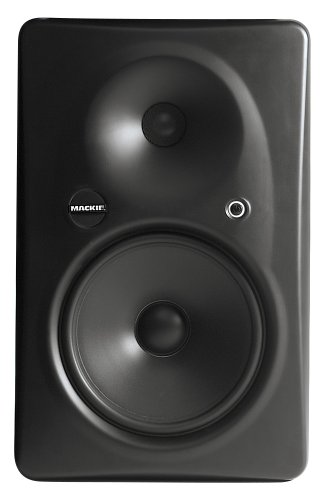
- 8-inch woofer with 150-watt maximum output
- Acoustic Space Control for room adaptation
- Built for stereo and surround applications
Best For: Large studios and surround-sound production
Flexible Room-Tuning Choice

- U-ART ribbon tweeter for detailed highs
- DSP shelf filters aid room matching
- XLR, TRS, and RCA inputs
Best For: Home studios and production rooms needing placement flexibility
Ready-to-Connect Reference Pair
ADAM T7V Bundle with XLR Cables

- Includes two T7V monitors and cables
- U-ART tweeter reaches up to 25 kHz
- 39 Hz low-end extension
Best For: Interface-based home studios and project rooms
Compact Mixing Workhorse

- Compact 5-inch nearfield design
- U-ART tweeter with HPS waveguide
- XLR and RCA inputs with shelf filters
Best For: Small home studios and space-conscious mixing setups
Deep-Bass Ribbon Reference – ADAM Audio T8V Bundle
For producers seeking studio monitors with ribbon tweeters, the ADAM Audio T8V bundle combines an ART ribbon-derived tweeter and HPS waveguide with an 8-inch woofer. Its 35Hz–22kHz response, 118dB SPL capability, and included isolation pads make it especially practical for bass-heavy work and larger rooms.
Best For: Hip-hop, trap, electronic, R&B, and larger mix rooms needing extended low-end reproduction.
Pros:
- ART ribbon tweeter with HPS waveguide supports detailed highs and controlled stereo dispersion.
- 35Hz–22kHz response reaches deeper bass than smaller nearfield monitors.
- Includes large isolation pads and balanced XLR cabling.
- Accepts XLR, TRS, and RCA inputs with HF and LF shelving controls.
Cons:
- The 8.5-inch cabinets and deep bass extension may be excessive for small rooms.
- This bundle is larger and less desktop-friendly than compact monitors.
The T8V is the strongest fit here when low-end reach and output are priorities. Its room-adjustment controls and included isolation pads help make the larger format easier to integrate, though careful placement remains important.
Wide-Image AMT Monitor – PreSonus R65 V2
The PreSonus R65 V2 is a compact option for shoppers comparing studio monitors with ribbon tweeters, using a 6.8-inch AMT design for articulate highs and wide stereo imaging. Its 6.5-inch woofer, acoustic controls, and flexible analog inputs suit a range of recording and post-production setups.
Best For: Home and commercial studios, broadcast, post-production, and listeners who prioritize high-frequency detail and a wide sweet spot.
Pros:
- AMT tweeter delivers articulate high-frequency response and narrow vertical dispersion.
- 6.5-inch LF driver provides clean, punchy bass.
- Low cut, mid, high, and acoustic-space controls help compensate for room placement.
- Balanced XLR, TRS, and unbalanced RCA inputs support flexible integration.
Cons:
- It is sold as a single monitor, so a stereo setup requires two units.
- Its listed response reaches 22kHz, which is less extended than some ribbon-style alternatives.
Choose the R65 V2 if imaging, tuning flexibility, and connection options matter more than very deep bass. The included Studio One Prime and Studio Magic software also adds value for new production setups.
Connected Ribbon Bookshelf Pair – SAMTRONIC A525-Active
The SAMTRONIC A525-Active brings a 4-inch planar ribbon tweeter to a powered bookshelf-speaker pair. While it is designed primarily for home theater and general listening rather than studio monitoring, its DSP-based Class D amplification, 5.25-inch carbon-fiber woofers, and broad connectivity may appeal to flexible desktop audio setups.
Best For: Home listening, computers, televisions, and multimedia systems that also need ribbon-tweeter detail.
Pros:
- 4-inch planar ribbon tweeter is designed for high-frequency detail above 20kHz.
- 200-watt stereo Class D amplification includes DSP and an active crossover.
- Supports USB, optical, coaxial, RCA, HDMI ARC, and Bluetooth 5.3.
- Includes remote control and 24-bit/192kHz USB audio support.
Cons:
- Its supplied notes identify it as a bookshelf and home-theater speaker, not a dedicated studio monitor.
- The listed 45Hz lower response is less suitable for demanding sub-bass mixing than larger monitors.
- Consumer-focused features may be unnecessary in a strictly balanced studio workflow.
The A525-Active is best viewed as a versatile ribbon-tweeter listening system rather than a conventional reference monitor. Its connectivity makes it convenient for mixed media use, but dedicated mixing applications may call for balanced studio inputs and more purpose-built room controls.
Wide-Sweet-Spot Studio Monitor – PreSonus Eris E7 XT
PreSonus Eris E7 XT 2-Way Active Studio Monitor with EBM Waveguide (Pack of 1)
Check Price On AmazonThe PreSonus Eris E7 XT is a two-way active studio monitor with a 6.55-inch woven-composite woofer and a silk-dome high-frequency driver. It is not a ribbon-tweeter design, but its EBM waveguide provides a wide sweet spot and solid imaging for buyers comparing different approaches to accurate studio monitoring.
Best For: Indoor music production and mixing where wide horizontal coverage and room-adjustment controls are important.
Pros:
- 100° horizontal by 60° vertical EBM waveguide creates a broad listening area.
- 6.55-inch woofer is designed for deep low-frequency reproduction.
- Level, high-pass, LF trim, HF trim, and acoustic-space controls support room tailoring.
- Balanced XLR, TRS, and RCA connections accommodate common studio sources.
Cons:
- Its 1.25-inch silk-dome tweeter is not a ribbon or AMT design.
- It is sold as one monitor, requiring two units for stereo monitoring.
- The larger cabinet may need more placement space than compact nearfields.
The Eris E7 XT makes sense for buyers who value a broad sweet spot and flexible acoustic tuning over a ribbon-tweeter configuration. It offers a practical, adaptable monitoring platform, particularly when multiple listeners need a consistent stereo image.
Compact Desk Upgrade – Mackie CR4.5
The Mackie CR4.5 is a practical choice for smaller desktop setups that need more low-end reach than 3.5-inch monitors. While it is not a ribbon-tweeter design, this pair offers a 4.5-inch woofer, front-panel tone control, and included isolation pads for straightforward everyday monitoring.
Best For: Desktop producers, content creators, and listeners wanting a compact stereo pair with flexible voicing controls.
Pros:
- Sold as a pair with speaker wire and connection cables included.
- 4.5-inch woofers provide fuller low end than smaller 3.5-inch monitors.
- Front-panel Tone Knob and Location Switch help tailor the sound to the setup.
- Isolation pads are included for tabletop use.
Cons:
- Its 1-inch tweeter is not a ribbon tweeter.
- The compact design is rated at 50 watts, limiting headroom compared with larger monitors.
- It is intended for tabletop mounting rather than a larger dedicated studio installation.
The CR4.5 makes the most sense when desk space, included accessories, and simple front-panel adjustment matter more than advanced high-frequency driver technology.
Ribbon-Style Detail Pick – ADAM Audio T7V
The ADAM Audio T7V is the strongest match here for shoppers seeking studio monitors with ribbon tweeters. Its U-ART tweeter and HPS waveguide are designed to deliver detailed high frequencies, while the 7-inch woofer, room-adjustment filters, and multiple analog inputs support more demanding production and mixing work.
Best For: Producers, mixers, broadcasters, and video-post users who want extended high-frequency detail and adaptable room placement.
Pros:
- U-ART tweeter and HPS waveguide provide detailed high-frequency reproduction.
- 7-inch woofer delivers a wider low-end range than compact desktop monitors.
- High- and low-shelf DSP filters help adapt the monitor to difficult room acoustics.
- Rear-firing bass reflex port and multiple analog connections support flexible placement and integration.
Cons:
- Sold as an individual monitor rather than a pair.
- The larger cabinet requires more desk or stand space.
- Its 70-watt output and 39 Hz frequency response may be more than needed for basic desktop listening.
For a roundup focused on ribbon-tweeter-style designs, the T7V is the most purpose-built option. Its larger woofer and acoustic-adjustment controls also make it better suited to serious monitoring than casual desktop playback.
Large-Room Workhorse – Mackie HR824mk2
The Mackie HR824mk2 is a large active monitor for studios, surround applications, and audio-production spaces where output and room control are priorities. It is not a ribbon-tweeter monitor, but its 8-inch low-frequency driver, 150-watt maximum output, optimized waveguide, and Acoustic Space Control make it the most substantial option in this group.
Best For: Larger recording rooms, surround-sound setups, and users needing powerful monitoring with placement compensation.
Pros:
- 8-inch woofer and 150-watt maximum output provide substantial monitoring capability.
- Acoustic Space Control helps adapt the monitor to different rooms.
- Aluminum Zero Edge baffle and optimized waveguide support accurate, natural reproduction.
- Designed for high-definition audio and 5.1 or 7.1 surround applications.
Cons:
- Its 1-inch tweeter is not a ribbon tweeter.
- The large, heavy cabinet is not ideal for a small desktop: it weighs 38.4 pounds and measures 17.5 by 14.5 by 21.25 inches.
- The supplied information lists one monitor, so a stereo setup requires checking pair availability.
The HR824mk2 is best viewed as a room-focused professional monitor rather than a compact ribbon-tweeter alternative. Choose it when scale, output, and acoustic adjustment outweigh space efficiency.
Flexible Room-Tuning Choice – ADAM T-Series T7V Pair
For producers who want studio monitors with ribbon tweeters and useful placement flexibility, this ADAM Audio T-Series pair combines the U-ART tweeter with a rear-firing bass-reflex port and adjustable DSP shelf filters. Its XLR, 1/4-inch TRS, and RCA connectivity also makes it practical for varied studio and home-audio setups.
Best For: Recording, producing, mixing, and video post-production in rooms where placement and tonal adjustment matter.
Pros:
- U-ART tweeter and HPS waveguide provide detailed high-frequency monitoring.
- High- and low-shelf DSP filters help adapt the monitors to difficult rooms.
- Multiple analog inputs support XLR, 1/4-inch TRS, and RCA connections.
- Includes two monitors and offers a stated five-year manufacturer warranty.
Cons:
- The 7-inch monitors are relatively substantial for compact desktops.
- They are corded and not water resistant.
The T-Series T7V pair is a strong fit when accurate high-frequency feedback and room-adjustment controls are more important than a small footprint. Its broad connection options make integration straightforward.
Ready-to-Connect Reference Pair – ADAM T7V Bundle with XLR Cables
This bundle is a convenient option for shoppers seeking studio monitors with ribbon tweeters and a direct connection to an audio interface or mixer. It includes two T7V monitors plus balanced 1/4-inch TRS-to-XLR cables, while the U-ART tweeter reaches up to 25 kHz for detailed high-frequency monitoring.
Best For: Home studios, project rooms, and desktop production setups that already use an audio interface or mixer.
Pros:
- Includes two active T7V monitors and two balanced connection cables.
- U-ART ribbon tweeter is specified to reach up to 25 kHz.
- 7-inch woofer reaches down to 39 Hz for monitoring kick, bass, and synth lows.
- High- and low-shelf trims help compensate for room or desktop effects.
Cons:
- The included cables are intended for 1/4-inch TRS outputs to XLR inputs.
- Seven-inch monitors may be more than a very small desk or room needs.
- The supplied listing describes a two-year standard product warranty.
With cables included, this T7V bundle reduces setup friction for an interface-based studio. The larger woofer and ribbon tweeter make it a practical choice for users wanting a monitor pair they can continue to use as their setup grows.
Compact Mixing Workhorse – ADAM T5V 5-Inch Pair Bundle
For smaller workspaces, this T5V bundle offers studio monitors with ribbon tweeters in a more compact 5-inch format. The U-ART tweeter, HPS waveguide, adjustable shelf filters, and included XLR cables target detailed monitoring and straightforward studio integration.
Best For: Compact home studios and critical mixing setups that need a smaller nearfield monitor pair.
Pros:
- U-ART tweeter and HPS waveguide support detailed highs and stereo imaging.
- Specified frequency response spans 45 Hz to 25 kHz.
- Bi-amplified 70-watt design provides separate woofer and tweeter amplification.
- XLR and RCA inputs plus high- and low-shelf filters support flexible setup.
Cons:
- The 5-inch woofer offers less low-frequency extension than the T7V models.
- Included cable descriptions vary between the supplied listing details, so verify the package before ordering.
- The listing states a one-year limited warranty.
The T5V pair is the sensible compact option in this group. It preserves ADAM’s ribbon-tweeter approach and room-adjustment controls while taking up less space than a 7-inch monitor pair.
How We Picked the Best Studio Monitors with Ribbon Tweeters
We focused on powered nearfield monitors and monitor-style speakers that use ribbon, air-motion-transformer, or ribbon-tweeter designs. We compared woofer size, stated frequency range, maximum output, active amplification, cabinet format, acoustic controls, and practical connectivity. Room size and listening distance matter as much as specifications, so the selection includes compact 4.5- and 5-inch models alongside 7- and 8-inch monitors.
We also considered whether each product is sold individually or as a pair, since many studio monitors require two units for accurate stereo imaging. Bundles may add cables, isolation pads, or other accessories, but verify the exact contents before ordering.
Quick Comparison
| Best For | Recommended Size | What to Prioritize |
|---|---|---|
| Small desk or bedroom studio | 4.5–5 inches | Controlled bass, compact footprint, rear-panel tuning |
| General mixing and production | 5–7 inches | Balanced response, stereo imaging, useful headroom |
| Larger rooms or louder playback | 7–8 inches | Low-frequency extension, maximum SPL, placement distance |
| Editing, podcasts, and casual listening | 4.5–6.5 inches | Clear midrange, simple controls, flexible inputs |
Key Buying Factors for Studio Monitors with Ribbon Tweeters
Room Size and Woofer Diameter
Larger woofers can produce deeper bass and higher output, but they are not automatically better in a small untreated room. Excess low-end energy can exaggerate room modes and make bass decisions less reliable. Compact monitors are often easier to place near a desk, while 7- and 8-inch models generally need more space behind and around them.
Treble Detail and Listening Fatigue
Ribbon and air-motion-transformer tweeters are designed for detailed high-frequency reproduction. That can improve the audibility of transients and fine mix changes, but a bright monitor, reflective room, or excessive listening level may become tiring. Use the monitor’s high-frequency controls and add basic acoustic treatment when possible.
Amplification, Output, and Bass Extension
Check the continuous or stated power, maximum SPL, and frequency range together rather than relying on one number. More output is useful for tracking and larger rooms, while extended bass can help electronic, hip-hop, film, and orchestral work. A subwoofer may be more practical than oversized monitors if the room cannot support strong low frequencies.
Inputs, Controls, and Placement
Balanced XLR or TRS connections are preferable for longer studio runs and noisy setups. Look for input sensitivity, high- and low-frequency trim, and front-panel convenience controls if the speakers will also serve as desktop monitors. Isolation pads or stands can reduce desk vibrations and improve imaging.
Who Should Buy Which Studio Monitors with Ribbon Tweeters?
Choose a compact 5-inch model for a small home studio, close listening distance, and a balanced mix of recording and production. Step up to a 6.5- or 7-inch monitor if you need more headroom and fuller bass without moving into the largest cabinets. An 8-inch option is best for a suitably sized, treated room where deeper low-end monitoring and louder playback are priorities.
For beginners, prioritize accurate placement, balanced connections, and a manageable room response over maximum power. For experienced mixers, compare the monitor’s tonal character with your room and reference tracks. If you mainly produce at a desk or need flexible everyday playback, compact models and a good pair of isolation pads may offer the best overall value.