A good projector screen with a stand can turn a backyard, living room, classroom, or presentation space into a usable viewing area without permanent installation. The best options balance image size, screen format, stability, portability, and setup time.
We compared 10 portable models ranging from compact 80-inch screens to expansive 150-inch designs, including front- and rear-projection options, carry bags, sandbags, and wrinkle-resistant materials.
Best 10 Projector Screens with Stands Picks for 2026
Best Overall
PropVue 100-Inch Tripod Projector Screen
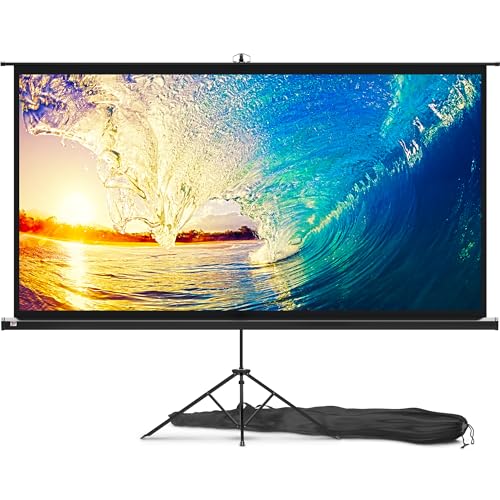
- 100-inch 16:9 matte screen
- Adjustable, stable tripod stand
- Indoor and outdoor versatility
Best For: Large movie nights, presentations, and events
Best Lightweight Pick
AODIOU 80-Inch Outdoor Projector Screen

- Lightweight aluminum frame
- Tool-free setup and storage bag
- Includes outdoor stabilizing accessories
Best For: Camping, picnics, and compact movie nights
Best Quick-Setup Option
Excelimage 80-Inch Tripod Screen
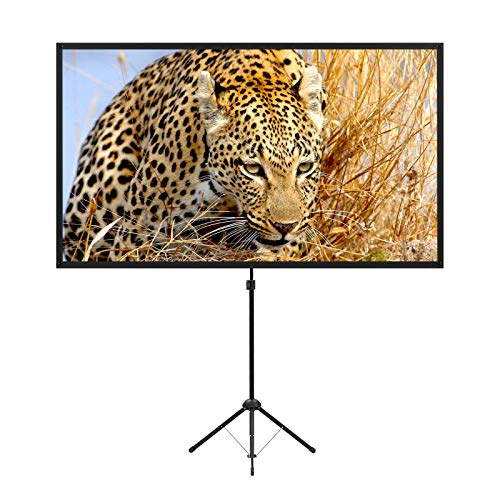
- Sets up in about two minutes
- Lightweight 8.5-pound construction
- Tensioned frame for a flat surface
Best For: Mobile home cinema and quick outdoor screenings
Best Large Outdoor Screen
ZUVMITG 120-Inch Projector Screen

- Expansive 120-inch 16:9 display
- Includes stakes, ropes, and sandbags
- Front and rear projection support
Best For: Backyard movie nights and larger outdoor gatherings
Best Compact Tripod Pick
VISULAPEX 80-Inch Portable Screen

- 80-inch 16:9 fiberglass screen
- Sets up in under three minutes
- Adjustable tripod and carrying bag
Best For: Travel, camping, and smaller movie spaces
Best Large Outdoor Setup
SKERELL 100-Inch Portable Screen

- 100-inch 16:10 display
- Includes ropes, nails, and water bags
- Foldable design with carry bag
Best For: Backyard theaters and larger gatherings
Best Bright 100-Inch Tripod

- 100-inch screen with stated 1.5 gain
- Sets up in about two minutes
- Adjustable tripod with ground nails
Best For: Bright home theater and backyard viewing
Best Overall – PropVue 100-Inch Tripod Projector Screen
For shoppers comparing projector screens with stands, the PropVue offers a large 100-inch 16:9 display, adjustable height, and a tripod design suited to both indoor and outdoor viewing. Its included carrying bag and tight-strap setup make it practical for movie nights, presentations, and events.
Best For: Buyers who want a versatile 100-inch screen for home theaters, presentations, and backyard use.
Pros:
- Large 100-inch 16:9 screen with a 160-degree viewing angle.
- Adjustable height and stable wide-leg tripod support.
- Portable design with a fitted carrying bag and tight straps.
- Works for indoor and outdoor venues, including schools, offices, and parties.
Cons:
- At 17.6 pounds, it is heavier than the other portable options here.
- Setup requires assembly in three steps rather than instant deployment.
This is a strong all-purpose choice when screen size and placement flexibility matter more than minimizing carry weight.
Best Lightweight Pick – AODIOU 80-Inch Outdoor Projector Screen
The AODIOU is a convenient option among projector screens with stands for camping, picnics, and smaller movie nights. Its aluminum frame weighs about 5.62 pounds, assembles without tools, and packs into a padded carrying bag.
Best For: Shoppers prioritizing portability and simple setup for outdoor or compact indoor viewing.
Pros:
- Lightweight aluminum construction for easier transport.
- Tool-free assembly and disassembly with a storage bag.
- 80-inch 16:9 display with a 160-degree viewing angle.
- Includes ropes, hanging hooks, and a water bag for added outdoor stability.
Cons:
- The 80-inch size is smaller than the 100- and 120-inch alternatives.
- Its glossy finish may not suit shoppers specifically seeking a matte surface.
Choose this model when easy carrying and compact storage are more important than maximum image size.
Best Quick-Setup Option – Excelimage 80-Inch Tripod Screen
For buyers seeking projector screens with stands that are quick to assemble, the Excelimage sets up in about two minutes. Its 80-inch 16:9 screen uses four tensioned aluminum tubes to create a flat viewing surface and folds into a carrying bag.
Best For: Home cinema users and mobile viewers who want a compact screen with a fast setup.
Pros:
- Approximate two-minute assembly with no complicated setup.
- Lightweight 8.5-pound design with a carrying bag.
- Four tensioned tubes help maintain a flat screen surface.
- 160-degree viewing angle and 1.2 gain glass-fiber screen material.
Cons:
- Its 80-inch display is less immersive than the larger models.
- The tensioned multi-part frame requires assembly and disassembly after use.
This model balances portability, fast setup, and image-supporting tension, making it a practical choice for recurring indoor or outdoor use.
Best Large Outdoor Screen – ZUVMITG 120-Inch Projector Screen
The ZUVMITG stands out among projector screens with stands for its expansive 120-inch size and outdoor-focused stability kit. A reinforced base, steel frame, stakes, ropes, and sandbags help support backyard movie nights, camping, and other larger gatherings.
Best For: Outdoor hosts who want a large screen with front-and-rear viewing and extra wind-support accessories.
Pros:
- Large 120-inch 16:9 screen for a more cinematic presentation.
- Includes four stakes, two ropes, and two sandbags for outdoor stability.
- Supports front and rear projection with a 160-degree viewing angle.
- Washable milk-silk fabric and included storage bag support repeated use.
Cons:
- The larger size requires more setup and space than the 80-inch options.
- At 12.5 pounds, it is not the lightest screen for frequent carrying.
- It is listed as a floor-mount design rather than a traditional tripod mount.
This is the strongest fit for buyers who value screen size and outdoor stability, especially for backyard gatherings where wind support is useful.
Best Compact Tripod Pick – VISULAPEX 80-Inch Portable Screen
If you want projector screens with stands for flexible indoor and outdoor viewing, this VISULAPEX model offers a compact 80-inch format, adjustable tripod height, and a carry-friendly design. Its 16:9 fiberglass screen sets up in under three minutes and stores in a tube when not in use.
Best For: Campers, travelers, and smaller indoor or outdoor movie setups.
Pros:
- 1.2-gain fiberglass surface with a black-coated back for vivid 4K-compatible images.
- Adjustable tripod height from 59 to 89 inches with a sturdy metal frame.
- Lightweight design weighs about 8.5 pounds and includes a carrying bag.
- Offers a 160-degree viewing angle and can be used indoors or outdoors.
Cons:
- The actual viewing area is 70 by 39 inches, so it is smaller than larger 100-inch options.
- Indoor placement requires space wider than 70 inches and taller than 89 inches.
This is a practical choice when portability and fast assembly matter more than maximum screen size. Verify the listed screen and tripod dimensions before buying.
Best Large Outdoor Setup – SKERELL 100-Inch Portable Screen
For shoppers comparing projector screens with stands for backyard theaters and group viewing, this SKERELL model provides a 100-inch display with a foldable frame and included outdoor anchoring accessories. The no-tool setup takes about five minutes and the carry bag is designed for transport.
Best For: Backyard movie nights, family trips, presentations, and larger gatherings.
Pros:
- Large 100-inch screen with an 85-by-53-inch viewing area and 160-degree angle.
- Includes ropes, nails, and water bags to improve stability in windy outdoor conditions.
- Natural polyester fabric supports double-sided projection and resists wrinkles and curling.
- Aluminum alloy floor bracket and carry bag support repeated setup and transport.
Cons:
- The 16:10 aspect ratio may not match content designed for standard 16:9 screens.
- Its listed overall dimensions require more floor space than compact tripod models.
This option prioritizes viewing size and outdoor versatility. Its included anchoring kit is useful, but outdoor setup still requires suitable space and secure placement.
Best Bright 100-Inch Tripod – PARIS RHÔNE PVC Movie Screen
This PARIS RHÔNE model is among the projector screens with stands suited to buyers who want a large, bright presentation for indoor or outdoor use. Its 100-inch PVC screen has a stated 1.5 gain, while the adjustable aluminum tripod and ground nails support flexible placement.
Best For: Home theaters, backyard gatherings, classrooms, and buyers seeking a bright 100-inch display.
Pros:
- Multi-layer, cinema-grade PVC surface with a stated 1.5 gain for bright projection.
- Adjustable tripod height from 64 to 85 inches and included ground nails for outdoor use.
- One-person setup takes about two minutes using three steps.
- Includes a carry bag, four support rods, and support for wall-mounted or standing use.
Cons:
- The glossy PVC finish may be less suitable for shoppers specifically seeking a matte surface.
- It is heavier than the compact 80-inch alternative, weighing about 5.85 kg.
- The listed warranty is 12 months, despite lifetime customer support being advertised separately.
Choose this screen if a bright, large-format image and quick setup are priorities. The tripod height range and included stakes make it adaptable, but check your ceiling and outdoor footprint first.
Lightweight Outdoor Pick – TOWOND 100-Inch Portable Screen
If you want projector screens with stands that are easy to move between the living room and backyard, this 100-inch TOWOND model is a practical option. Its 16:9 matte screen supports front and rear projection, while the included tripod, sandbag, ropes, ground nails, and carry bag help with flexible setup and transport.
Best For: Portable movie nights, camping, home theaters, school events, weddings, and other indoor or outdoor uses.
Pros:
- Lightweight 7.5-pound design with an included carry bag.
- Foldable, washable polyester screen with a wrinkle-resistant design.
- Supports front and rear projection with a 160-degree viewing angle.
- Includes stabilization accessories for outdoor use, including sandbags, ropes, and ground nails.
Cons:
- Outdoor stability depends on properly using the sandbags, ropes, and stakes.
- The 100-inch size may be less suitable for viewers seeking a very large cinema-style display.
Choose this model when portability and a straightforward setup matter more than maximum screen size. The detachable stand and relatively low weight make it convenient for frequent location changes.
Big-Screen Cinema Choice – FvcDmik 150-Inch Outdoor Screen
For shoppers comparing projector screens with stands for a more immersive viewing area, this FvcDmik model provides a large 150-inch 16:9 display. Its foldable polyester screen is designed for indoor or outdoor use, and the included carry bag, ground nails, and rigging ropes support transport and setup.
Best For: Backyard cinema, sports viewing, gaming, presentations, church events, parties, and other situations where a large image is useful.
Pros:
- Large 150-inch screen for a cinematic viewing experience.
- Foldable, anti-crease fabric is described as wrinkle-free and easy to clean.
- Tool-free assembly designed to take only a few minutes.
- Includes a heavy-duty carry bag, ground nails, and rigging ropes.
Cons:
- The very large footprint requires substantial space for setup.
- Outdoor stability is intended for light winds and still requires proper anchoring.
This is the strongest fit when screen size is the priority. Before buying, measure your intended viewing area and account for the space needed to secure the floor-mounted frame.
Large Dual-Projection Pick – TOWOND 150-Inch Screen
This TOWOND model is one of the larger projector screens with stands for indoor and outdoor viewing, offering a 150-inch diagonal display with a 160-degree viewing angle. The wrinkle-resistant polyester screen supports both front and rear projection, while its foldable stand and carry bag make it suitable for travel.
Best For: Backyard movie nights, family events, camping, sports, gaming, office presentations, and other large-group viewing.
Pros:
- 150-inch screen supports 16:9 and 1:1 aspect ratios.
- Thick, anti-crease polyester material supports front and rear projection.
- Tool-free foldable stand can be assembled in about five minutes.
- 11.5-pound carry-ready design fits in car trunks, including sedans.
Cons:
- Indoor setup requires a room wider than 140 inches, according to the supplied guidance.
- The larger 11.5-pound frame is less lightweight than the 100-inch TOWOND option.
- Outdoor use requires the included ropes and ground nails for added stability.
This screen makes sense for buyers who want a large image and flexible projection direction without a complicated assembly process. Confirm your room width or outdoor layout first, since the 150-inch format needs considerable space.
How We Picked the Best Projector Screens with Stands
We focused on the factors that matter most when choosing portable projection equipment: screen size, aspect ratio, supported projection type, setup design, included accessories, portability, and stated image performance. The selection includes 80-, 100-, 120-, and 150-inch models so shoppers can match screen size to viewing distance and available space.
Because product specifications can vary by seller and configuration, treat claims such as “4K,” gain rating, wrinkle resistance, and wind stability as useful indicators rather than guarantees. Your projector, room lighting, viewing angle, and setup surface will also affect the final image.
Quick Comparison
- Best for compact setups: 80-inch screens are easier to transport and generally quicker to assemble.
- Best all-around size: 100-inch models offer a large image without demanding as much space as 120- or 150-inch screens.
- Best for large gatherings: 120- and 150-inch screens create a more immersive image but need more room, stronger anchoring, and greater viewing distance.
- Best for flexible projection: Models advertising front and rear projection can work in more varied layouts, provided the projector and surroundings support that arrangement.
Key Buying Factors for Projector Screens with Stands
Screen Size and Aspect Ratio
Match the screen to your projector’s native format. A 16:9 screen suits most movies, streaming content, and modern home-theater projectors. A 16:10 model may be more appropriate for certain laptops, presentations, and business projectors. Measure the setup area before choosing a 120- or 150-inch screen.
Indoor Versus Outdoor Use
Outdoor setups need more than a large viewing surface. Look for a stable frame or base, included ropes or sandbags, and a carry case if you expect to move the screen frequently. Never leave a lightweight screen unattended in changing weather or strong wind.
Material, Gain, and Viewing Angle
Higher gain can make the image appear brighter from a central viewing position, while a wider viewing angle may be preferable for groups spread across a room or yard. A matte or low-reflection surface is often the safer choice when viewers sit in different positions.
Portability and Setup
Check the packed dimensions, total weight, frame construction, and included accessories. A screen that is technically portable may still be inconvenient if it requires several people or extensive anchoring. Carry bags, sandbags, stakes, and ropes can make a noticeable difference.
Who Should Buy Which Projector Screens with Stands?
Choose an 80-inch model for apartments, camping, small patios, or occasional presentations. A 100-inch screen is the most versatile choice for many homes and backyards. Select 120 inches when you have a larger audience and enough depth for comfortable viewing. The 150-inch options are best for dedicated outdoor movie nights or spacious rooms where maximum image size matters.
If you regularly switch between indoor and outdoor locations, prioritize a foldable screen with a sturdy stand, practical carrying case, and clear anchoring system. For presentations, verify the aspect ratio and laptop compatibility first. For backyard movies, prioritize stability, brightness, setup speed, and a screen surface that remains reasonably smooth after transport.