The right interview microphone helps voices sound clear in busy streets, events, studios, and on-camera conversations. Dynamic models are especially useful when you need durable handling and strong background-noise control.
We compared 10 wired, USB/XLR, and wireless options to help reporters, filmmakers, podcasters, and mobile creators choose a microphone that fits their recording setup and working style.
Best 10 Dynamic Microphones for Interviews Picks for 2026
Broadcast Interview Standard

- Cardioid dynamic capsule
- Double-layer grille and wind protection
- Balanced, low-handling-noise handheld design
Best For: Broadcast interviews and live reporting
Wireless Event Interview Kit

- Includes two wireless handheld microphones
- Up to 164-foot stated range
- Rechargeable batteries and receiver included
Best For: Interviews and speeches with compatible PA equipment
All-Around Field Interview Pick

- Omnidirectional dynamic capsule
- Voice-focused response for intelligible speech
- Includes microphone flag and zip case
Best For: Handheld reporting and presentation work
Street Content Creator Choice
Movo Wireless Mini DI for iPhone

- Wireless Lightning system for iPhone
- Handheld adapter included
- Up to 10 hours of stated battery life
Best For: Mobile iPhone interviews and street reporting
Classic Voice Clarity
Shure SM58 Pro XLR Dynamic Vocal Microphone

- Cardioid pickup helps focus on the speaker.
- Built-in filter reduces plosives and breath noise.
- Rugged metal construction with XLR connectivity.
Best For: Interface-based interviews, podcasts, and broadcast voice recording
Wireless Mobile Convenience
PQRQP 3-in-1 Wireless Lavalier Microphone

- Supports iPhone, Android, cameras, and more.
- Wireless range is listed at up to 65 feet.
- Dual clip-on transmitters support hands-free interviews.
Best For: Mobile, outdoor, livestream, and two-person interviews
Reporter-Style Simplicity
Movo HM-M2 Dynamic Interview Microphone
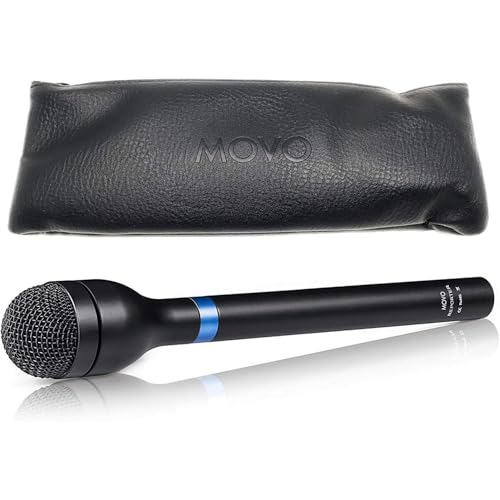
- Purpose-built for handheld interview recording.
- Omnidirectional capsule captures voices from multiple angles.
- Internal pop filter helps control plosives and handling noise.
Best For: Street interviews, news reporting, and camera-based recording
Best Broadcast Handheld
Shure SM63LB Omnidirectional Dynamic Microphone

- Omnidirectional pickup for flexible handheld use
- Speech-focused 80Hz–20kHz response
- Shock mount and hum-resistant coil
Best For: Broadcast, television, and professional handheld interviews
Best USB/XLR Desktop Option
FIFINE AmpliGame AM8 Dynamic Microphone

- USB plug-and-play plus XLR upgrade path
- Cardioid pickup rejects off-axis noise
- USB mute, gain, and headphone controls
Best For: Desk-based interviews, podcasts, and streaming
Broadcast Interview Standard – Sennheiser MD 46
The Sennheiser MD 46 is a purpose-built choice among dynamic microphones for interviews, live reporting, and broadcasting. Its cardioid pickup pattern, double-layer grille, and low-handling-noise design help keep attention on the speaker while reducing unwanted handling sounds.
Best For: Reporters, broadcasters, and interviewers who want a balanced handheld microphone with a wired XLR connection.
Pros:
- Cardioid dynamic capsule helps focus on the speaker.
- Double-layer grille basket provides added wind protection.
- Long handle and balanced design support comfortable handheld use.
- Low-handling-noise construction suits field reporting.
Cons:
- Wired XLR operation requires compatible recording or mixing equipment.
- Its handheld broadcast design is less convenient for compact smartphone setups.
Choose the MD 46 when controlled directional pickup and professional handheld handling matter more than wireless convenience. It is a particularly strong fit for traditional interview and reporting workflows.
Wireless Event Interview Kit – AURGIC Dual Handheld System
This AURGIC dual-microphone system is a flexible option among dynamic microphones for interviews when you need cordless movement. It includes two rechargeable handheld microphones, a receiver, and adapters for 6.35 mm and 3.5 mm inputs, making it suited to compatible PA, mixer, amplifier, and speaker setups.
Best For: Event interviews, speeches, conferences, weddings, and other setups using a compatible PA system or amplifier.
Pros:
- Two handheld microphones support interviewer-and-guest use.
- 2.4 GHz wireless connection offers a stated range of up to 164 feet.
- Rechargeable batteries provide over eight hours of continuous use.
- Automatic pairing and included receiver support plug-and-play setup.
Cons:
- Not compatible with Bluetooth or AUX connections.
- Not designed for direct connection to mobile phones, computers, or tablets.
- Requires compatible 3.5 mm or 6.35 mm microphone-input equipment.
This system makes the most sense when portability and two-person wireless coverage are priorities. Confirm your equipment has a supported microphone input before buying.
All-Around Field Interview Pick – RØDE Reporter
The RØDE Reporter is a straightforward choice among dynamic microphones for interviews and presentations. Its omnidirectional dynamic capsule gives the user freedom of positioning, while the voice-focused frequency response is designed to maintain intelligibility in varied conditions.
Best For: Handheld interviews, presentations, broadcasting, and reporting where flexible microphone positioning is useful.
Pros:
- Omnidirectional pickup allows flexible use around the microphone.
- Voice-tailored response is designed for crisp, intelligible speech.
- Wired XLR connector suits cameras and professional audio equipment.
- Includes a detachable microphone flag and zip case.
Cons:
- Omnidirectional pickup can capture sound from multiple directions.
- Wired operation limits movement compared with wireless systems.
- It is intended for handheld use rather than a compact lavalier setup.
The RØDE Reporter is a practical pick for interviewers who value natural handling freedom and speech clarity. Its omnidirectional design is especially useful when the microphone must be shared or repositioned quickly.
Street Content Creator Choice – Movo Wireless Mini DI for iPhone
The Movo Wireless Mini DI with WMX-HM adapter is a portable option among dynamic microphones for interviews, especially for iPhone-based street reporting and content creation. Its 2.4 GHz wireless system, handheld adapter, noise reduction, and compact carry case are designed for recording on the move.
Best For: iPhone users creating street interviews, vlogs, reports, and other mobile video content.
Pros:
- Lightning receiver connects directly to compatible iPhones.
- Included handheld adapter supports interview-style operation or stand mounting.
- Up to 10 hours of stated battery life supports extended recording sessions.
- Wireless range is specified up to 164 feet, with a compact carrying case included.
Cons:
- Lightning connectivity limits compatibility to suitable iPhone setups.
- The supplied microphone is a lavalier-style system with a handheld adapter, not a traditional XLR handheld microphone.
- It is not a universal solution for cameras, mixers, or Android devices.
For mobile creators using an iPhone, this kit combines a wearable transmitter with a more familiar handheld interview format. Check your iPhone’s connector compatibility before choosing it for field work.
Classic Voice Clarity – Shure SM58 Pro XLR Dynamic Vocal Microphone
For buyers comparing dynamic microphones for interviews, the Shure SM58 is a dependable XLR option when clear, focused vocal pickup and rugged construction matter. Its cardioid pattern helps minimize background noise, while the built-in pop protection helps control plosives and breath noise.
Best For: Interviews recorded through an audio interface, along with podcasting, broadcast, and other voice-focused applications.
Pros:
- Cardioid pickup focuses on the speaker and helps reduce background noise.
- Built-in spherical grille and filter reduce plosives, breath, and wind noise.
- Rugged metal construction is designed for demanding professional use.
- Includes a swivel stand adapter and storage bag.
Cons:
- Uses an XLR connection, so it requires compatible recording equipment.
- Its handheld design is less discreet than a lavalier microphone.
The SM58 is a strong fit when interview audio quality and durability take priority over wireless convenience. It is especially practical for controlled recording setups with an audio interface.
Wireless Mobile Convenience – PQRQP 3-in-1 Wireless Lavalier Microphone
For on-the-go dynamic microphones for interviews, this PQRQP wireless lavalier system emphasizes simple mobile recording. Its 3-in-1 receiver supports iPhone, Android, camera, and other devices, while the clip-on transmitters leave the speaker’s hands free.
Best For: Outdoor interviews, livestreams, vlogs, and mobile video recording where wireless freedom is more important than a handheld reporter-style format.
Pros:
- Includes a receiver for Lightning, USB-C, and camera connections.
- Wireless transmission reaches up to 65 feet according to the supplied notes.
- Active noise reduction is designed to reduce environmental distractions.
- Dual transmitters offer hands-free clip-on recording for two speakers.
Cons:
- Omnidirectional pickup may capture more surrounding sound than a directional microphone.
- Requires battery charging, with up to seven hours of working time stated.
- Some Android and USB-C devices may require OTG to be enabled manually.
This system is a convenient choice for interviews recorded directly on phones or cameras. Its wireless, clip-on design is particularly useful when moving around or keeping the microphone out of the frame.
Reporter-Style Simplicity – Movo HM-M2 Dynamic Interview Microphone
Movo HM-M2 Dynamic Omnidirectional Handheld Interview Microphone with 3-Pin XLR Connector
Check Price On AmazonAmong dynamic microphones for interviews, the Movo HM-M2 is purpose-built for handheld reporting. Its omnidirectional capsule captures voices from different angles, while the internal pop filter helps reduce plosives and handling noise without requiring phantom power.
Best For: Street interviews, news-style reporting, presentations, podcasts, and camera-based voice recording.
Pros:
- Designed specifically for interview and reporter-style voice reproduction.
- Omnidirectional pickup makes it practical when speakers are positioned around the microphone.
- Internal pop filtering helps reduce plosives, wind noise, and low-frequency noise.
- Passive XLR operation does not require external phantom power.
Cons:
- Omnidirectional pickup can admit more ambient sound than a cardioid design.
- Requires an XLR-compatible camera or recording device.
- Its handheld format may be less suitable for discreet or hands-free interviews.
The HM-M2 is a straightforward tool for interviewers who want a dedicated handheld microphone and uncomplicated XLR operation. It is a sensible match for field reporting and camera-based setups.
Best Wireless Interview Pick – Bietrun Wireless Dynamic Microphone
For interviews that require mobility, the Bietrun is a practical option among dynamic microphones for interviews. Its UHF wireless system offers a stated range of up to 160 feet, while the unidirectional dynamic capsule is designed for speech, conferences, events, and other live applications. The rechargeable receiver displays battery and signal information, but the microphone itself requires two AA batteries.
Best For: Mobile interviews, events, presentations, and speakers with a compatible microphone input.
Pros:
- Wireless UHF operation with a stated range of up to 160 feet.
- Unidirectional dynamic design suited to speech and event use.
- Receiver includes a rechargeable 650mAh battery and battery/signal display.
- Metal construction and 15 adjustable UHF channels support flexible setup.
Cons:
- Requires equipment with a dedicated microphone input; it is not compatible with Bluetooth speakers or AUX inputs.
- The handheld microphone uses two AA batteries, which are not included.
- Phone and computer connections require suitable conversion cables, sold separately.
The Bietrun stands out when wireless movement matters more than a simple plug-and-record workflow. Confirm your speaker, mixer, or camera has the required input and plan for the separate battery and cable needs before buying.
Best Broadcast Handheld – Shure SM63LB Omnidirectional Dynamic Microphone
The Shure SM63LB is a purpose-built wired handheld for speech, broadcast, television, and on-stage use. Among dynamic microphones for interviews, its omnidirectional pattern can make handheld positioning more forgiving, while the tailored frequency response and low-frequency roll-off are intended to support speech intelligibility and reduce handling noise.
Best For: Broadcast interviews, television work, stage reporting, and other professional handheld applications using XLR equipment.
Pros:
- Omnidirectional dynamic pickup supports flexible handheld positioning.
- 80Hz–20kHz response is tailored for speech intelligibility.
- Built-in shock mount and low-frequency roll-off help reduce handling noise and stand vibration.
- Humbucking coil resists strong electromagnetic hum, and the grille is designed to withstand drops up to 2 meters.
Cons:
- Wired XLR connectivity requires compatible recording or broadcast equipment.
- Omnidirectional pickup may capture more surrounding sound than a directional design.
- Its professional broadcast focus may be more than casual interview setups require.
The SM63LB is a strong fit when durability, speech-focused response, and dependable XLR handling are priorities. Choose it for controlled broadcast or field workflows where an omnidirectional handheld is preferable to a USB or wireless model.
Best USB/XLR Desktop Option – FIFINE AmpliGame AM8 Dynamic Microphone
The FIFINE AmpliGame AM8 is a flexible desktop choice for creators who record interviews at a computer. Its cardioid dynamic design is intended to reject off-axis noise, while USB provides a straightforward connection and XLR offers an upgrade path to an audio interface or mixer. A headphone jack, mute control, and gain adjustment add useful monitoring and recording controls.
Best For: Desk-based interviews, podcasts, streaming, and creators who want both USB convenience and future XLR flexibility.
Pros:
- USB and XLR connectivity support beginner-friendly use and later equipment upgrades.
- Cardioid pickup helps reject unwanted off-axis sound.
- USB mode includes tap-to-mute, headphone monitoring, and microphone gain control.
- Built-in 3/8-inch and 5/8-inch threads fit many microphone stands without an adapter.
Cons:
- An XLR cable and audio interface or mixer are required for XLR operation.
- RGB lighting and function controls are available only over USB.
- The recommended recording distance is relatively close, at about 2 to 6 inches.
The AM8 is especially practical for interviewers who alternate between computer recording and more advanced XLR setups. Its cardioid pattern favors a controlled desk environment, and the USB controls make it easier to manage live sessions without extra hardware.
How We Picked the Best Dynamic Microphones for Interviews
We focused on microphones suited to real interview conditions rather than judging vocal performance alone. Our selection includes handheld broadcast microphones, conventional XLR models, USB/XLR hybrids, lavalier systems, and wireless handheld kits. We considered pickup pattern, connection options, portability, power requirements, build quality, and how easily each model can integrate with cameras, phones, mixers, audio interfaces, or computers.
Because interview environments vary widely, there is no single best microphone for everyone. A reporter working outdoors may prioritize handling noise and wireless range, while a studio interviewer may prefer the consistency of a wired XLR connection.
Quick Comparison
- Best for professional handheld interviews: Sennheiser MD 46 and Rode Reporter.
- Best for familiar all-purpose value: Shure SM58 Pro.
- Best for omnidirectional handling: Rode Reporter, Movo HM-M2, and Shure SM63LB.
- Best for wireless mobility: the dual handheld cordless system and Bietrun wireless microphone.
- Best for phone-based creators: Movo Wireless Mini DI and PQRQP wireless lavalier system.
- Best for computer and interface flexibility: FIFINE AmpliGame AM8.
Key Buying Factors for Dynamic Microphones for Interviews
Pickup Pattern
Cardioid microphones primarily capture sound from the front and can reduce nearby noise, making them useful for controlled interviews or louder surroundings. Omnidirectional models capture sound from around the capsule and can produce more consistent results when the interviewer moves the microphone between speakers, though they may collect more ambient sound.
Connection and Compatibility
XLR microphones require a compatible camera input, mixer, recorder, or audio interface, but they are dependable and easy to upgrade within a larger audio system. USB/XLR models offer computer convenience alongside traditional connections. Wireless systems can simplify mobile production, but check connector compatibility with your phone or camera and confirm whether adapters are included.
Handling, Power, and Range
For street reporting, look for a sturdy body, effective wind protection, and a design that tolerates frequent handling. Wireless microphones also require charged transmitters and receivers, so battery life and charging convenience matter. Verify the stated operating range for the spaces where you plan to work, especially when walls or crowds may interfere with transmission.
Voice Quality and Background Noise
Dynamic microphones generally handle loud environments well and do not require phantom power in typical XLR setups. However, placement still matters: keep the microphone close to the speaker without blocking the frame, and use a windscreen outdoors. A microphone with excellent specifications will not compensate for excessive distance or severe wind.
Who Should Buy Which Dynamic Microphones for Interviews?
Choose a professional wired handheld if reliability, straightforward operation, and broadcast-style interviews are your priorities. Choose an omnidirectional model if you regularly pass one microphone between speakers or need more forgiving positioning. Choose wireless if you film while walking, work away from a recorder, or want fewer cables in the shot.
Choose a lavalier system for discreet, hands-free recording with a phone or camera. Choose a USB/XLR microphone if you want one microphone for interviews, streaming, and computer-based recording. Before buying, confirm the required adapters, recording device support, monitoring options, and whether the package includes the cable, receiver, clip, windscreen, or other accessories you need.