The best AV receivers with Chromecast combine simple wireless streaming with the switching, amplification, and surround processing a modern home theater needs. They can connect your TV, game consoles, disc players, speakers, and music services through one central hub.
This roundup compares 10 capable receivers from Sony, Denon, Onkyo, and Yamaha, with attention to streaming support, HDMI features, surround formats, room correction, and system expandability.
Best 10 Av Receivers with Chromecast Picks for 2026
Best Chromecast Pick
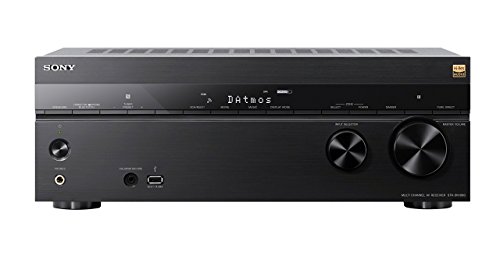
- Built-in Chromecast with Wi-Fi and Google Home support
- 7.2-channel Dolby Atmos and DTS:X surround
- 4K HDR pass-through and six HDMI inputs
Best For: Connected 4K home theaters that want Chromecast built in
Best 8K Upgrade

- Three dedicated 8K HDMI inputs
- Dolby Atmos, DTS:X, and height virtualization
- HEOS, AirPlay 2, Alexa, and Google Assistant support
Best For: 8K-ready home theaters with multi-room streaming
Best Music-Focused Alternative

- 7.2-channel Dolby Atmos and DTS:X processing
- MusicCast, AirPlay, Spotify Connect, and Alexa
- Phono input and YPAO multipoint sound optimization
Best For: Music lovers building a calibrated multi-room system
Best Gaming-Ready Option

- Three 40Gbps HDMI 2.1 inputs with 8K support
- THX Certified Select 7.2-channel amplification
- Dolby Atmos, DTS:X, and Google Assistant support
Best For: HDMI 2.1 home theaters with immersive audio
Best Premium Pick

- 7.2 channels with Dolby Atmos and DTS:X
- Six HDMI 2.1 inputs plus 8K and 4K/120 support
- Chromecast, AirPlay, Spotify Connect, and multi-room zones
Best For: Feature-rich home theater and multi-room setups
Best All-Around Value

- 7.2-channel Dolby Atmos and DTS:X support
- 8K/60Hz and 4K/120Hz HDMI with eARC
- MusicCast, AirPlay 2, Wi-Fi, Bluetooth, and voice control
Best For: Flexible home theater and multi-room audio
Best for Google Cast Streaming

- Google Cast with Wi-Fi and multiple music services
- 4K/120 and 8K/60 HDMI with gaming features
- Dolby Atmos, room correction, and Bluetooth Multipoint
Best For: Google Cast users, gamers, and compact immersive theaters
Best Value 8K Pick
Yamaha RX-V4A 5.2-Channel AV Receiver

- 4K/120 and 8K/60 HDMI support
- YPAO automatic room calibration
- MusicCast, AirPlay 2, Wi-Fi, and Bluetooth
Best For: Compact home theaters and gaming setups
Best Feature-Rich Midrange Pick
Yamaha RX-A2A AVENTAGE 7.2-Channel AV Receiver

- 7.2 channels with Dolby Atmos and DTS:X
- Seven HDMI inputs with 8K and 4K/120 support
- Multipoint YPAO R.S.C. calibration
Best For: Expandable surround systems and gaming
Best Premium Connectivity Pick
Yamaha RX-A4A AVENTAGE 7.2-Channel AV Receiver

- 40 Gbps 8K/60 and 4K/120 on all HDMI inputs
- Seven inputs and three HDMI outputs
- Surround:AI and advanced YPAO R.S.C. calibration
Best For: Complex, premium home theater systems
Best Chromecast Pick – Sony STR-DN1080
If you want an AV receiver with Chromecast built in, the Sony STR-DN1080 combines convenient wireless streaming with 7.2-channel home theater sound. It supports Dolby Atmos, DTS:X, 4K HDR pass-through, Bluetooth, Wi-Fi, AirPlay, and Google Home compatibility, making it a flexible choice for a connected entertainment setup.
Best For: Buyers prioritizing built-in Chromecast and straightforward 4K home theater connectivity.
Pros:
- Built-in Chromecast, Wi-Fi, Bluetooth, AirPlay, and Google Home compatibility.
- 7.2-channel surround support with Dolby Atmos, DTS:X, and a phantom surround setting.
- 4K HDR pass-through with HDCP 2.2 and six HDMI inputs.
- Includes a calibration microphone, remote, batteries, and FM antenna.
Cons:
- Its video connectivity is centered on 4K rather than newer 8K features.
- At 23 pounds, it may require a sturdy, well-ventilated shelf.
The STR-DN1080 is especially appealing when Chromecast convenience matters as much as surround sound. Its combination of wireless features, room calibration, and flexible HDMI connectivity makes it a well-rounded option for a traditional 7.2-channel system.
Best 8K Upgrade – Denon AVR-X1700H
The Denon AVR-X1700H is a strong option for shoppers comparing AV receivers with Chromecast-compatible smart-home control. While the supplied specifications highlight Google Assistant, Alexa, AirPlay 2, Bluetooth, Wi-Fi, and HEOS rather than built-in Chromecast, it offers a modern 7.2-channel platform with advanced 8K HDMI features and broad streaming support.
Best For: Buyers seeking an 8K-ready receiver with Google Assistant, multi-room streaming, and flexible control.
Pros:
- Supports Dolby Atmos, DTS:X, DTS Virtual:X, and Dolby Atmos Height Virtualization.
- Three dedicated 8K inputs, 8K/60Hz and 4K/120Hz pass-through, and eARC.
- Works with Wi-Fi, Bluetooth, AirPlay 2, HEOS, Alexa, and Google Assistant.
- On-screen setup guide and color-coded rear connections simplify installation.
Cons:
- The supplied notes do not specifically list built-in Chromecast.
- Its rated output is 80 watts per channel, which may be limiting for demanding large-room systems.
Choose the AVR-X1700H if future-facing video support and smart control are more important than confirmed native Chromecast integration. Its HDMI 2.1 capabilities and multi-room features give it considerable flexibility for newer home theater systems.
Best Music-Focused Alternative – Yamaha AVENTAGE RX-A780
The Yamaha AVENTAGE RX-A780 is a versatile 7.2-channel receiver for shoppers considering AV receivers with Chromecast alongside other streaming ecosystems. The supplied notes list Wi-Fi, Bluetooth, AirPlay, Spotify Connect, MusicCast, and Alexa compatibility, plus Dolby Atmos, DTS:X, 4K HDR support, phono input, and YPAO room optimization.
Best For: Music-focused systems that need multi-room audio, phono connectivity, and calibrated surround sound.
Pros:
- Supports Dolby Atmos, DTS:X, Cinema DSP 3D, and 7.2-channel processing.
- Includes Wi-Fi, Bluetooth, AirPlay, Spotify Connect, MusicCast, and Alexa compatibility.
- YPAO sound optimization uses RSC and multipoint measurement.
- Offers phono support, Zone 2, and MusicCast wireless surround capability.
Cons:
- The supplied notes do not specifically confirm built-in Chromecast.
- Its HDMI section provides 4K support rather than the newer 8K standard.
The RX-A780 makes the most sense for listeners who want a receiver to handle both serious music streaming and immersive movie sound. Its phono input, MusicCast ecosystem, and YPAO calibration add useful flexibility beyond basic HDMI switching.
Best Gaming-Ready Option – Onkyo TX-NR6100
The Onkyo TX-NR6100 is a THX Certified 7.2-channel receiver worth considering when comparing AV receivers with Chromecast and modern HDMI connectivity. Its supplied features include Google Assistant compatibility, Wi-Fi, Bluetooth, 8K HDMI 2.1 inputs, Dolby Atmos, DTS:X, and discrete Zone 2 audio and video.
Best For: Home theater and gaming setups that need HDMI 2.1 bandwidth, THX certification, and Google Assistant support.
Pros:
- Three HDMI 2.1 inputs with 40Gbps support and 8K capability.
- THX Certified Select amplification with 210 watts per channel listed in the specifications.
- Supports 5.2.2-channel Dolby Atmos and DTS:X playback.
- Provides Wi-Fi, Bluetooth, Google Assistant, streaming services, and Zone 2 audio/video.
Cons:
- The supplied notes do not specifically list built-in Chromecast.
- Its stated power figures vary between the product bullets and specifications, so system matching deserves attention.
- The receiver is relatively large and heavy, measuring 21 inches deep and weighing 10.4 kg.
The TX-NR6100 stands out when high-bandwidth HDMI and certified theater performance are priorities. It is a practical alternative to a Chromecast-centered receiver, particularly for systems combining 8K sources, immersive audio, and multi-zone use.
Best Premium Pick – Sony STR-AN1000
The Sony STR-AN1000 is a strong choice among AV receivers with Chromecast for shoppers building a feature-rich home theater. It combines 7.2-channel amplification with Dolby Atmos and DTS:X, HDMI 2.1 connectivity, and several wireless streaming options.
Best For: Home theater enthusiasts who want premium connectivity, immersive sound, and flexible multi-room capabilities.
Pros:
- Supports 8K and 4K/120 video through six HDMI 2.1 inputs and two outputs.
- Includes Dolby Atmos, DTS:X, Digital Cinema Auto Calibration IX, and 360 Spatial Sound Mapping.
- Offers Chromecast built-in, Wi-Fi, Bluetooth, Spotify Connect, Apple AirPlay, and Google Assistant support.
- Supports Zone 2 and Zone 3 distribution and Works With Sonos integration.
Cons:
- Its 165-watt rating is specified at 6 ohms, 1 kHz, one channel, with 0.9% THD, so it is not directly comparable to every receiver rating.
- Its extensive feature set may be more than needed for a basic stereo or compact setup.
The STR-AN1000 stands out for combining Chromecast with advanced room calibration, object-based surround formats, and broad HDMI 2.1 support. It is particularly appealing if you want one receiver to handle current gaming, movie, music, and multi-room needs.
Best All-Around Value – Yamaha RX-V6A
The Yamaha RX-V6A is a versatile option among AV receivers with Chromecast-style Google Assistant and multi-room streaming support. Its 7.2-channel design pairs Dolby Atmos and DTS:X with 8K-capable HDMI, MusicCast, and a broad selection of music services.
Best For: Home theater, gaming, and multi-room listeners seeking broad connectivity without moving to a higher-channel receiver.
Pros:
- Provides 7.2-channel sound with Dolby Atmos, virtualized height effects, and DTS:X.
- Supports 8K/60Hz and 4K/120Hz HDMI formats, along with eARC and HDCP 2.3.
- Includes Wi-Fi, Bluetooth, AirPlay 2, Spotify Connect, voice control, and MusicCast multi-room audio.
- Supports numerous services, including Pandora, TIDAL, Deezer, Qobuz, and Amazon Music HD.
Cons:
- The listed output is 100 watts, which may offer less headroom than more powerful receivers for demanding speaker systems.
- The supplied notes do not explicitly list built-in Chromecast or Google Cast, so verify the exact streaming requirements before buying.
The RX-V6A is a well-rounded receiver for users who value gaming-friendly HDMI features, surround sound, and extensive network audio. Its MusicCast platform is a useful advantage for compatible multi-room systems.
Best for Google Cast Streaming – Yamaha RX500A
The Yamaha RX500A is a practical pick among AV receivers with Chromecast because it specifically supports Google Cast alongside Wi-Fi, Spotify Connect, AirPlay 2, and other streaming platforms. It also delivers 7.2-channel processing, Dolby Atmos, and modern 4K/120 and 8K/60 HDMI support.
Best For: Streamers and gamers who want Google Cast, current HDMI features, and flexible surround layouts in one receiver.
Pros:
- Supports Google Cast, Spotify Connect, AirPlay 2, TIDAL Connect, and Qobuz Connect.
- Handles 4K/120 and 8K/60 video, Dolby Vision, HDR10+, eARC, ALLM, and VRR.
- Supports Dolby Atmos and DTS:X with flexible 5.2.2-channel or 7.2-channel layouts.
- Includes room correction, Bluetooth Multipoint, quick setup guidance, and four customizable Scene presets.
Cons:
- The 70-watt output is lower than the rated output of the other listed receivers.
- Five HDMI ports may provide less input capacity than receivers with larger HDMI arrays.
The RX500A is the most direct fit for shoppers prioritizing Google Cast in a modern entertainment system. Its combination of streaming support, gaming features, room correction, and immersive formats makes it a sensible choice for a streamlined setup.
Best Value 8K Pick – Yamaha RX-V4A 5.2-Channel AV Receiver
If you want an affordable entry point among AV receivers with Chromecast-style smart-home compatibility, the Yamaha RX-V4A focuses on essential 8K-ready connectivity, wireless streaming, and straightforward surround sound. It supports Wi-Fi, Bluetooth, AirPlay 2, MusicCast, Spotify Connect, and voice control through compatible Alexa and Google Assistant devices or Siri via AirPlay 2.
Best For: Compact home theaters, gaming setups, and buyers who want 5.2-channel surround sound with modern HDMI features.
Pros:
- Supports 4K/120 and 8K/60 HDMI signals, with eARC and HDCP 2.3.
- Includes YPAO automatic room calibration for easier setup.
- Offers MusicCast, AirPlay 2, Wi-Fi, Bluetooth, and Spotify Connect streaming.
- Supports Dolby TrueHD, Dolby Digital, and DTS-HD Master Audio.
Cons:
- Its 5.2-channel layout is less expandable than the 7.2-channel AVENTAGE models.
- It has four HDMI inputs and one HDMI output.
The RX-V4A is a sensible choice when you want current-generation video support and flexible wireless audio without moving up to a larger 7.2-channel receiver. Its main limitation is the smaller channel and connection count.
Best Feature-Rich Midrange Pick – Yamaha RX-A2A AVENTAGE 7.2-Channel AV Receiver
The Yamaha RX-A2A is a strong option for shoppers comparing AV receivers with Chromecast-style voice and streaming ecosystems. Its 7.2-channel design adds Dolby Atmos, DTS:X, Zone 2, seven HDMI inputs, and broad wireless support, while three HDMI inputs handle 8K/60B and 4K/120AB signals.
Best For: Larger surround systems, next-generation gaming, and listeners who want more inputs and immersive audio formats.
Pros:
- Provides 7.2-channel processing with Dolby Atmos, DTS:X, and Zone 2.
- Includes seven HDMI inputs, with support for 8K/60B and 4K/120AB on three inputs.
- Offers ALLM and VRR for compatible next-generation gaming systems.
- Features multipoint YPAO R.S.C. calibration, MusicCast, AirPlay 2, and Works with Sonos support.
Cons:
- Its most advanced 8K/60B and 4K/120AB support is limited to three HDMI inputs.
- Works with Sonos requires a Sonos Port, sold separately.
With more channels, inputs, and immersive formats than the RX-V4A, the RX-A2A is better suited to a growing theater system. It is a practical middle ground for buyers who need flexibility without stepping up to the RX-A4A.
Best Premium Connectivity Pick – Yamaha RX-A4A AVENTAGE 7.2-Channel AV Receiver
The Yamaha RX-A4A is the premium choice in this group of AV receivers with Chromecast-style smart-home integration and broad streaming support. It combines 7.2-channel Dolby Atmos, DTS:X, and Auro-3D processing with seven HDMI inputs, three outputs, and 40 Gbps support for 8K/60 and 4K/120 across all HDMI inputs.
Best For: Advanced home theaters that need multiple displays, premium room calibration, and comprehensive gaming connectivity.
Pros:
- All HDMI inputs support 8K/60 and 4K/120 at 40 Gbps.
- Provides seven HDMI inputs and three outputs for flexible system connections.
- Includes Dolby Atmos, DTS:X, Auro-3D, and real-time Surround:AI processing.
- Offers multipoint YPAO R.S.C. calibration with 3D measurement, precision EQ, and low-frequency mode.
Cons:
- Its advanced features may be more than a basic 5.1 setup requires.
- Works with Sonos requires a Sonos Port, sold separately.
The RX-A4A stands out when connectivity and calibration depth matter as much as surround processing. Its three HDMI outputs and full-bandwidth HDMI inputs make it the most suitable of these three models for complex, high-end systems.
How We Picked the Best Av Receivers with Chromecast
We focused on receivers that suit current home theater systems, prioritizing dependable network and wireless streaming, straightforward HDMI connectivity, immersive audio support, and useful calibration tools. We also considered channel count, power flexibility, gaming-oriented HDMI features, multiroom ecosystems, and the practical needs of smaller versus larger rooms.
Chromecast compatibility can vary by model, firmware, and the device used for casting. Before buying, verify the receiver’s current specifications and confirm that your preferred casting method works with your phone, tablet, or streaming service.
Quick Comparison
| What to Compare | Why It Matters |
|---|---|
| Channels | 5.2 is suitable for simpler systems; 7.2 allows more surround or height-speaker options. |
| HDMI support | 4K/120 and 8K inputs are useful for newer consoles and displays, while eARC simplifies TV audio connections. |
| Streaming platform | Chromecast, MusicCast, HEOS, and other ecosystems affect app support and multiroom compatibility. |
| Room correction | Calibration tools help balance speaker levels, timing, and tonal response in your listening room. |
Key Buying Factors for Av Receivers with Chromecast
Check HDMI Features First
Count the HDMI sources you plan to connect, then check whether the receiver supports the video standards your setup requires. Gamers should look for suitable 4K/120 support, low-latency features, and enough compatible inputs. Owners of newer 8K displays should confirm where 8K signals are supported rather than assuming every HDMI port has identical capabilities.
Match Channels and Power to Your Room
A 7.2-channel receiver gives you more placement options than a 5.2 model, including rear surrounds or some height-speaker layouts. However, additional channels do not automatically mean better sound. Consider room size, speaker sensitivity, listening distance, and whether you may add a separate amplifier later.
Compare Audio Processing and Calibration
Dolby Atmos and DTS:X can create a more enveloping soundstage when paired with suitable speakers. Automatic room correction is also valuable, especially in rooms with reflective surfaces or asymmetrical seating. Look for a calibration system that is easy to run and offers enough adjustment for your speaker layout.
Think About Streaming and Control
Chromecast is convenient for casting compatible audio and video from supported apps, but the overall network platform matters too. Check app quality, voice-control compatibility, Bluetooth behavior, multiroom support, and whether the receiver offers the services you use most.
Who Should Buy Which Av Receivers with Chromecast?
Choose a 5.2-channel model if you want a straightforward system for a modest room and do not need rear surrounds or extensive expansion. A 7.2-channel receiver is the better all-round choice for larger rooms, immersive audio, or future speaker upgrades.
Prioritize newer HDMI and gaming features if your system includes a current-generation console or 8K television. Buyers focused on music should compare streaming ecosystems and room correction as carefully as amplifier specifications. Finally, choose a model with the right number of inputs and a familiar control platform; convenient daily operation is just as important as headline specifications.