Choosing the right equalizer can make a live mix clearer, more controlled, and easier to manage in challenging rooms. The best option depends on your channel count, frequency-band control, connectivity, and whether you need a standalone processor or an integrated mixer.
We’ve gathered 10 promising audio equalizers for live sound, including graphic EQ processors, DJ mixers, and console-style systems. Use the guide below to narrow the list by setup, tuning needs, and budget.
Best 10 Audio Equalizers for Live Sound Picks for 2026
Precision Rack EQ
Dual-Channel 15-Band Graphic Equalizer
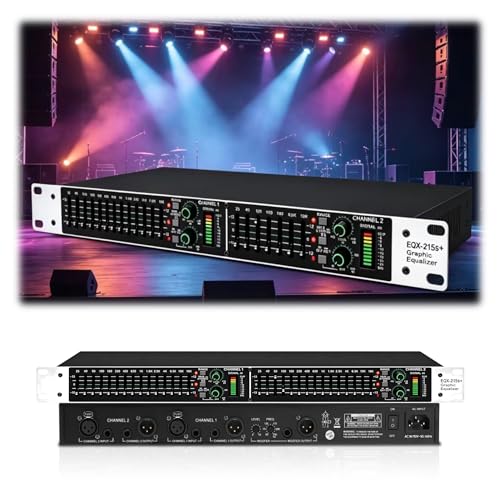
- 15 bands per channel with ±12 dB adjustment
- Noise reduction and LED level monitoring
- Balanced XLR and TRS connectivity
Best For: Hands-on EQ shaping in live, studio, karaoke, and rack audio systems
Mobile Mixing Hub
6-Channel DJ Mixer with 7-Band EQ
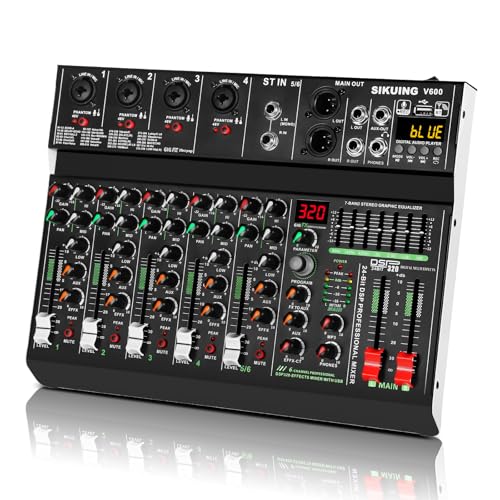
- 7-band EQ with 320 built-in DSP effects
- Bluetooth 5.0 and USB sound-card functionality
- Six channels with 48V phantom power capability
Best For: Portable live mixing, streaming, rehearsals, and small recording setups
Spectrum Control Center
EQ8100 20-Band Graphic Equalizer
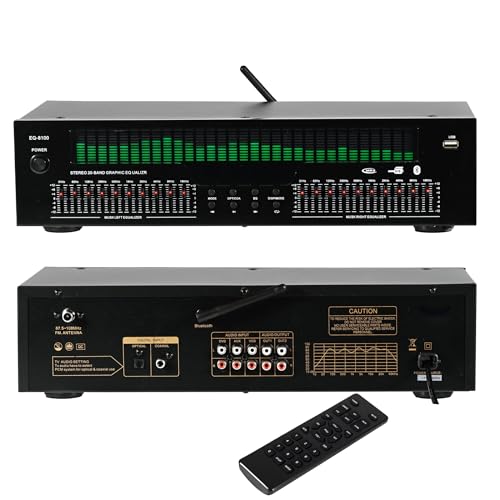
- 20-band EQ with 31-band spectrum analyzer
- Optical, coaxial, USB, RCA, and Bluetooth inputs
- 1U chassis with presets and auto-save
Best For: Stage, studio, DJ, and home systems needing visual frequency monitoring
Gig-Ready Mixer
Phenyx Pro PTX-15 4-Channel Console

- 3-band channel EQ and 5-band stereo graphic EQ
- 16 DSP effects with Bluetooth and USB audio
- Four XLR/line combo inputs and flexible sends
Best For: Compact live gigs, karaoke, DJ events, and stage mixing
Rack-Ready Feedback Control
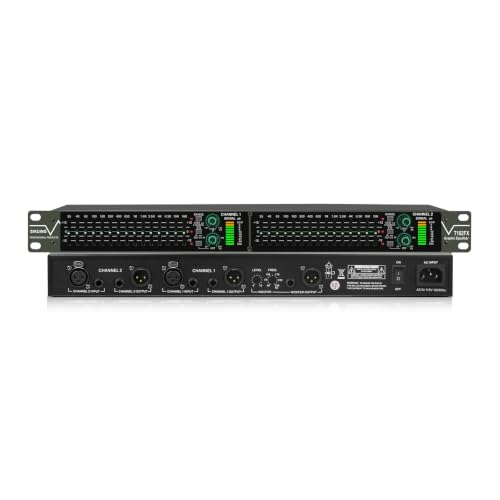
- Dual 15-band EQ covers 25Hz–16kHz
- Low-cut filter and bypass switch
- Adjustable subwoofer output and LED metering
Best For: Live rigs and compact rack systems needing subwoofer control
Maximum Frequency Control

- 31 bands per channel with up to ±12dB adjustment
- Low-cut and bypass switches simplify system tuning
- XLR and 1/4-inch TRS input/output options
Best For: Live, DJ, installation, and studio setups needing detailed EQ
Connected Digital Flexibility

- 20-band tuning with a 31-band spectrum display
- Bluetooth, USB, optical, and coaxial inputs
- Noise gate, presets, and auto-memory function
Best For: Home theaters, studios, and live-streaming systems using digital sources
Most Versatile
31-Band Bluetooth Graphic Equalizer

- 31-band control with spectrum monitoring
- 12 customizable modes and auto-save presets
- Optical, coaxial, USB, and Bluetooth connectivity
Best For: Flexible live, studio, DJ, and home audio setups
Best Rack-Mount Value
EQ-215 15-Band Stereo Equalizer
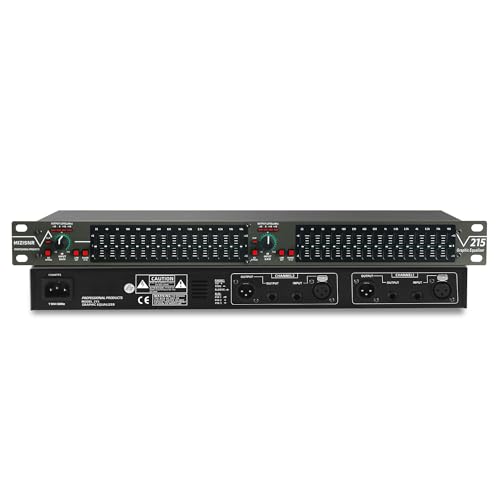
- Dual 15-band control with ±12 dB adjustment
- Low-cut filter reduces rumble and hum
- 1U rack mount with XLR and TRS connections
Best For: Conventional live, studio, and installed audio racks
Best for Subwoofer Integration

- Dual 15-band graphic EQ control
- Adjustable low-cut frequency for low-end cleanup
- Dedicated adjustable bass output
Best For: Live and installed systems with separate subwoofers
Precision Rack EQ – Dual-Channel 15-Band Graphic Equalizer
For buyers comparing audio equalizers for live sound, the RQG Dual Channel Graphic Equalizer offers detailed tonal control in a practical 1U rack-mount format. Its independent 15-band controls, noise-reduction circuitry, balanced connections, and front-panel monitoring features make it suitable for shaping sound during performances and installations.
Best For: Live sound rigs, karaoke systems, studios, churches, DJs, and home theaters needing dual-channel graphic EQ control.
Pros:
- Provides 15 adjustable bands per channel with a ±12 dB range.
- Includes built-in noise reduction and high-definition sound enhancement.
- Offers balanced XLR and 1/4-inch TRS inputs and outputs.
- Rugged 1U chassis includes LED level meters, clip indicators, and long-throw faders.
Cons:
- Its analog, rack-mounted design is less convenient for highly portable setups.
- It provides manual graphic EQ control rather than the DSP effects found in mixers.
This is a focused choice when precise, hands-on equalization matters more than wireless playback or built-in effects. The dual-channel layout and flexible connectivity make it especially practical for conventional live audio systems.
Mobile Mixing Hub – 6-Channel DJ Mixer with 7-Band EQ
Among audio equalizers for live sound, this six-channel mixer is geared toward users who need equalization alongside mixing, effects, and device connectivity. It combines a 7-band graphic EQ with 320 DSP effects, Bluetooth 5.0, USB recording, and 48V phantom power in a portable metal chassis.
Best For: Live streams, rehearsals, small performances, personal recording, and mobile setups combining microphones, instruments, and playback devices.
Pros:
- Six channels accommodate microphones, instruments, smartphones, computers, and other sources.
- 7-band graphic EQ and 320 DSP effects support detailed mix shaping.
- Bluetooth 5.0 enables wireless playback from compatible mobile devices.
- USB audio interface supports PC/Mac recording and zero-latency monitoring.
Cons:
- Its 7-band EQ offers less frequency control than the dedicated 15- or 20-band equalizers listed here.
- It is a mixer with integrated EQ rather than a standalone rack equalizer.
This model makes sense for buyers who want one portable control center instead of a separate mixer, EQ, and effects unit. Its broad connectivity is particularly useful for small live productions and streaming workflows.
Spectrum Control Center – EQ8100 20-Band Graphic Equalizer
For buyers seeking audio equalizers for live sound with visual feedback and digital source support, the EQ8100 combines 20-band graphic adjustment with a 31-band spectrum analyzer. Optical, coaxial, USB, Bluetooth 5.4, and RCA connectivity make it adaptable to stage, studio, home theater, and DJ applications.
Best For: Stage systems, concert setups, recording studios, DJ booths, home theaters, and users who value real-time spectrum visualization.
Pros:
- 20-band EQ provides broad control for stereo sound shaping.
- 31-band spectrum analyzer displays frequency levels in real time.
- Supports optical, coaxial, USB, RCA, and Bluetooth connections.
- 1U aluminum chassis, color-coded controls, presets, and auto-save support practical system operation.
Cons:
- The listed 19-inch dimensions may require careful rack or installation planning.
- Its extensive display and connectivity may be more than needed for a basic analog live rig.
The EQ8100 is a strong fit when frequency visibility is as important as adjustment range. Its analyzer, customizable modes, and varied inputs offer flexibility for users managing multiple audio sources across live and installed systems.
Gig-Ready Mixer – Phenyx Pro PTX-15 4-Channel Console
This Phenyx Pro console is a practical alternative to standalone audio equalizers for live sound when channel mixing and equalization need to happen in one unit. It provides four mono XLR/line combo inputs, per-channel controls, a 3-band channel EQ, a 5-band stereo graphic EQ, USB audio, Bluetooth, and 16 DSP effects.
Best For: Live gigs, stage performances, DJ events, karaoke, and compact setups requiring mixing, effects, and basic-to-intermediate EQ control.
Pros:
- Four mono XLR/line combo inputs support microphones, instruments, and other sources.
- Combines 3-band channel EQ with a 5-band stereo graphic equalizer.
- Includes 16 DSP effects, Bluetooth playback, and USB recording/playback.
- Provides AUX and EFX sends plus two main outputs for flexible routing.
Cons:
- The 5-band stereo graphic EQ is less detailed than the dedicated graphic equalizers in this roundup.
- Four channels may limit larger ensembles or more complex productions.
Choose this mixer when compact live control is more important than extensive frequency-by-frequency adjustment. Its channel controls, effects, routing options, and USB/Bluetooth features make it well suited to small performances and karaoke systems.
Rack-Ready Feedback Control – 15-Band Stereo EQ
For shoppers comparing audio equalizers for live sound, this 1U rackmount model focuses on practical feedback control, low-end cleanup, and subwoofer integration. Its dual-channel 15-band layout covers 25Hz to 16kHz, while the LED metering and clip indicator help you monitor levels during operation.
Best For: Live rigs, home studios, and compact rack systems that need stereo EQ with a dedicated subwoofer output.
Pros:
- Independent 15-band stereo EQ for detailed tonal shaping.
- Adjustable low-cut filter helps remove hum and muddy low frequencies.
- Dedicated subwoofer output with adjustable 50Hz–250Hz range.
- Rugged 1U metal chassis includes rack-mounting hardware.
Cons:
- Offers fewer frequency bands than a 31-band equalizer.
- Uses a corded 110V power source.
This is a sensible choice when you want straightforward analog controls, visual level monitoring, and bass-management flexibility in a compact rack unit. It is especially useful for systems where a subwoofer output and low-cut control matter as much as basic EQ adjustment.
Maximum Frequency Control – 31-Band Stereo EQ
Among audio equalizers for live sound, this dual-channel 31-band unit stands out for its broad adjustment range and detailed control. Each band offers up to ±12dB of adjustment, while the low-cut switch, bypass control, and LED ladders support practical setup and monitoring.
Best For: Live applications, DJ systems, audio installations, and studios that benefit from extensive stereo frequency shaping.
Pros:
- 31 bands per channel provide more precise tonal adjustment.
- Selectable ±6dB to ±12dB operating range supports different control needs.
- Low-cut switch helps reduce wind noise, floor rumble, and electrical hum.
- XLR balanced and 1/4-inch TRS connections offer setup flexibility.
Cons:
- The larger control set may be more involved for beginners.
- Its listed dimensions are deeper and taller than a compact 1U unit.
Choose this model when detailed manual shaping is more important than minimal controls. The 31-band layout and visual gain/output monitoring make it well suited to users who regularly tune different rooms, systems, or performance setups.
Connected Digital Flexibility – 20-Band Bluetooth EQ
This digital equalizer takes a more connected approach to audio equalizers for live sound, combining 20-band tuning with Bluetooth 6.0, USB, optical, and coaxial inputs. Its noise gate is designed to reduce ambient noise, current noise, and microphone howling, while the spectrum display provides real-time visual feedback.
Best For: Home theaters, recording studios, live-streaming setups, and users who want wireless and digital source compatibility.
Pros:
- 20 independent bands support detailed sound adjustment.
- Bluetooth 6.0, USB, optical, and coaxial connectivity expand source options.
- Built-in noise gate targets ambient noise, current noise, and microphone howling.
- 12 customizable modes and auto-memory presets simplify repeated use.
Cons:
- RCA connections may be less suitable for balanced professional live-audio wiring.
- It is a digital home-audio-oriented unit rather than a conventional rack graphic EQ.
This model is best for buyers who need flexible source connections and convenient presets alongside manual EQ. It can fit a live-streaming or hybrid audio setup, but users with balanced XLR-centered systems should confirm connectivity requirements first.
Most Versatile – 31-Band Bluetooth Graphic Equalizer
For shoppers comparing audio equalizers for live sound, this 31-band graphic equalizer offers extensive control across bass, mids, and treble. Its spectrum analyzer, noise and echo reduction, customizable modes, and broad connectivity make it adaptable to live stages, DJ setups, studios, and home systems.
Best For: Users who want detailed EQ control with Bluetooth, USB, optical, and coaxial connectivity.
Pros:
- 31-band tuning with real-time frequency monitoring and 12 customizable modes
- Noise and echo reduction help refine vocals and overall clarity
- Supports KTV mixers, receivers, studio monitors, car audio, USB, optical, and coaxial sources
- Portable design with auto-save presets for quick setup changes
Cons:
- The feature set may be more extensive than necessary for simple two-channel systems
- The supplied notes do not specify detailed input and output connector formats for every connection
This is the most feature-rich option in the group, especially for buyers who need flexible connectivity and many adjustment points. Confirm system compatibility and available rack or console space before purchasing.
Best Rack-Mount Value – EQ-215 15-Band Stereo Equalizer
This dual-channel 15-band unit is a straightforward choice among audio equalizers for live sound, particularly for users building a rack-based system. Each channel provides adjustable gain, while the low-cut switch helps reduce wind noise, floor rumble, and electrical hum during live applications, installations, or studio work.
Best For: Rack-mounted live sound, studio, and installation systems needing balanced connectivity and practical noise control.
Pros:
- 15 adjustable bands per channel with a range of up to ±12 dB
- Low-cut switch targets rumble, wind noise, and electrical hum
- XLR balanced and 1/4-inch TRS unbalanced inputs and outputs
- Standard 1U rack-mount design with a bypass switch for troubleshooting
Cons:
- Provides fewer bands than the 31-band model in this roundup
- Does not list a dedicated subwoofer output
The EQ-215 focuses on essential live and installed-system controls rather than extra connectivity features. Its dual-channel layout, low-cut filter, bypass switch, and rack format make it a practical fit for conventional professional audio rigs.
Best for Subwoofer Integration – EQX-215S 15-Band Stereo EQ
For live systems that need dedicated low-end management, the EQX-215S is one of the more specialized audio equalizers for live sound. It combines dual 15-band graphic control with an adjustable low-cut frequency and a dedicated bass output, allowing users to shape the main signal and subwoofer feed within a 1U rack-mount design.
Best For: Live events, studios, and installations that require separate, adjustable subwoofer output control.
Pros:
- 15 bands per channel with adjustable gain and decay from ±6 dB to ±12 dB
- Adjustable low-cut frequency provides more targeted low-end cleanup
- Dedicated bass output with adjustable frequency supports subwoofer integration
- XLR and 1/4-inch TRS connectivity, bypass operation, included cables, and a two-year warranty
Cons:
- Offers fewer EQ bands than a 31-band equalizer
- Its dedicated bass-output features may be unnecessary for systems without a separate subwoofer
- The supplied details identify 110-volt operation, so buyers should verify power compatibility
The EQX-215S stands out when bass routing matters as much as general tonal shaping. Choose it over a basic stereo equalizer when your system benefits from adjustable subwoofer output and more precise low-frequency management.
How We Picked These Audio Equalizers for Live Sound
We focused on equipment suited to practical stage, rehearsal, DJ, home-studio, and small-venue applications. Key considerations included the number of equalization bands, stereo or dual-channel operation, rack-mount suitability, mixer integration, DSP features, connectivity, and controls that help operators make fast adjustments during a performance.
Because these products serve different roles, the roundup includes both dedicated graphic equalizers and mixers with built-in EQ. A dedicated unit is usually better for fine-tuning a system’s overall response, while an integrated mixer can simplify a compact setup with fewer separate components.
Quick Comparison
| Best For | Look For |
|---|---|
| Small live rigs | Integrated mixer, useful channel count, and straightforward EQ controls |
| System tuning | Dual-channel operation, multiple frequency bands, and clear visual indicators |
| DJ and mobile setups | DSP effects, Bluetooth or USB connectivity, and flexible outputs |
| Rack-based installations | 1U rack-mount design, stereo operation, and noise-reduction features |
| Detailed tonal shaping | 15-, 20-, or 31-band graphic adjustment |
Key Buying Factors for Audio Equalizers for Live Sound
Band Count and Control Range
More bands allow finer correction across the frequency spectrum. A 15-band EQ can be sufficient for general tone shaping, while a 31-band model is more useful for room tuning and feedback management. More sliders also require more setup time and a clearer understanding of the system.
Standalone EQ or Mixer
Choose a standalone graphic equalizer when your mixer already handles inputs and effects. Select an integrated mixer when you want one device for source connections, channel control, EQ, effects, and outputs. Check whether the equalizer affects individual channels, the main bus, or both.
Inputs, Outputs, and Installation
Confirm compatibility with your microphones, instruments, amplifiers, powered speakers, and existing rack. Stereo outputs, subwoofer outputs, USB audio, and Bluetooth can add flexibility, but they are valuable only if they match your signal path.
Noise and Feedback Control
Noise-reduction features may help keep a system cleaner, but placement, gain staging, microphone technique, and speaker positioning matter just as much. For live use, prioritize responsive controls and easy-to-read displays so changes can be made quickly.
Who Should Buy Which Audio Equalizers for Live Sound?
Choose a dedicated 15-band EQ for a straightforward DJ, rehearsal, or small PA setup that needs basic tonal shaping. Choose a 20- or 31-band model if you regularly tune rooms, manage feedback, or need more precise frequency adjustments. Choose a mixer with built-in EQ and DSP if portability and an all-in-one workflow matter more than detailed system processing.
Before buying, map your complete signal chain and verify the number and type of connections. The best equalizer is the one that offers enough control for your venue without adding unnecessary complexity to setup and operation.